
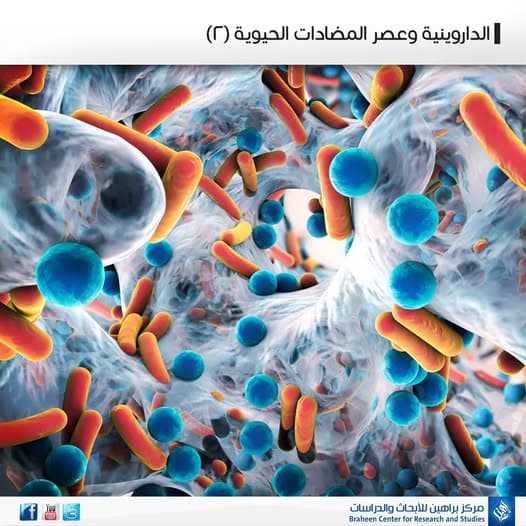
In 2013, the largest project (Metagenomic) was set up to look for genes responsible for antibiotic resistance in the midst of DNA sequences found in microbial communities worldwide.
Antique resistance
In 2013, the largest project (metagenomic) to search for genes responsible for antibiotic resistance in the midst of DNA sequences found in microbial communities worldwide, ended with the result that these genes are found in nature wherever scientists search for them, and published the results in the journal Current Biology.
Researchers believe that the reason for the abundance of these antibiotic-resistant genes in bacteria is clear and logical, as most of the antibiotics used by doctors today were prepared from microorganisms living in the earth such as bacteria and fungi, which means that the resistance genes existed before humans used antibiotics, and bacteria that did not have them from the beginning later borrowed them (horizontal transfer) simply from the companion you own.
Hospitals were once seen as breeding grounds for antibiotic-resistant bacteria, with many patients with weakened immunity helping to outdo the bacteria. Also, because of the death of rival bacteria that can’t resist antibiotics, the bacteria become resistant. But the results of the project suggest that resistance is everywhere in the environment around us, not just in hospitals.
The abundance of bacterial resistance may extend far beyond our sight. This was discovered by a group of researchers who studied the microbial environment of a cave in New Mexico, a cave known as Lechuguilla, characterized as one of the deepest caves on Earth, as well as the most isolated, where sunlight never reaches it.
The researchers concluded that these bacteria were highly resistant to different types of antibiotics, including strains resistant to about 14 different antibiotics, a wide variety of antibiotics of different chemical composition, including (Daptomycin) which is the last solution in the treatment of strains of germ-positive bacteria resistant to many antibiotics multi-drug resistance.
The researchers conclude from their findings by testing the susceptibility of these bacterial samples to antibiotics, that antibiotic resistance pre-existed for therapeutic use by humans: "The growing evidence confirms that environmental organisms are reservoirs of these resistance genes. On the other hand, the role that human use of antibiotics plays in the emergence of these genes remains controversial."
From the far north came the discoveries that support this position, where published many articles documenting the discovery of races of antibiotic-resistant bacteria buried in the frozen soil under the ice layers in Siberia, where scientists were able to separate and isolate bacteria from the soil and multiply in special bacterial farms and test their resistance to antibiotics, but these studies are suspicious.
To determine the age of antibiotic resistance and whether it precedes or follows human use of antibiotics, a group of scientists began to carefully examine the microbial environment of permafrost in Alaska-Siberian Beringia, which was formed in the late Pleistocene and is estimated to be 30,000 years old.
After separating and preparing DNA samples from the soil, taking into account that they are not mixed and contaminated by the presence of bacteria as far as possible, chemical and genomic tests were conducted, and the results were amazing. Scientists were able to identify sequences of DNA resistant to antibiotics, from those sequences (TetM) encoded for the protein responsible for creating bacteria resistant to the drug (Tetracycline), as well as a gene resistant to antibiotics (Betamate). are similar.
Bacterial resistance to antibiotics has always been the classic example that evolutionists use as empirical evidence for evolution. The proportions of antibiotic-resistant bacteria have increased dramatically since our discovery of antibiotics and their use in therapeutic applications. Evolutionists have interpreted this history of increasing resistance as the evolution of bacteria.
But the closest explanation to the logic now is that it was our use of antibiotics that created a competitive environment, put bacterial strains under selective pressure, eradicated non-resistant strains, and kept resistant strains alive. This conclusion was made by a group of scientists who found resistant genes, and found it consistent with the fact that resistance quickly appeared in hospitals and treatment units, must have existed long ago and then spread with the help of antibiotics.
3. Nesme, J., Cécillon, S., Delmont, T., Monier, J., Vogel, T., & Simonet, P. (2014). Large-Scale Metagenomic-Based Study of Antibiotic Resistance in the Environment. Current Biology, 24(10), 1096-1100. doi:10.1016/j.cub.2014.03.036
4. Bhullar K, Waglechner N, Pawlowski A, Koteva K, Banks ED, Johnston MD, Barton HA, Wright GD., Antibiotic Resistance Is Prevalent in an Isolated Cave Microbiome. Retrieved January 11, 2018, from http://journals.plos.org/plosone/article...
5. D’Costa, V. M., King, C. E., Kalan, L., Morar, M., Sung, W. W., Schwarz, C., Froese D, Zazula G, Calmels F, Debruyne R, Golding GB, Poinar HN, Wright GD. (2011, August 31). Antibiotic resistance is ancient. Retrieved January 11, 2018, from https://www.nature.com/articles/nature10388
—
Source: Published on Facebook's "Braheen Center" page
https://www.facebook.com/braheen.org/posts/pfbid021jsR6cXfTJM6hVALzKMQwgcaYdED5nGLgJr8vveyLCzi9ouMkEcufzRaEy7peTRpl