
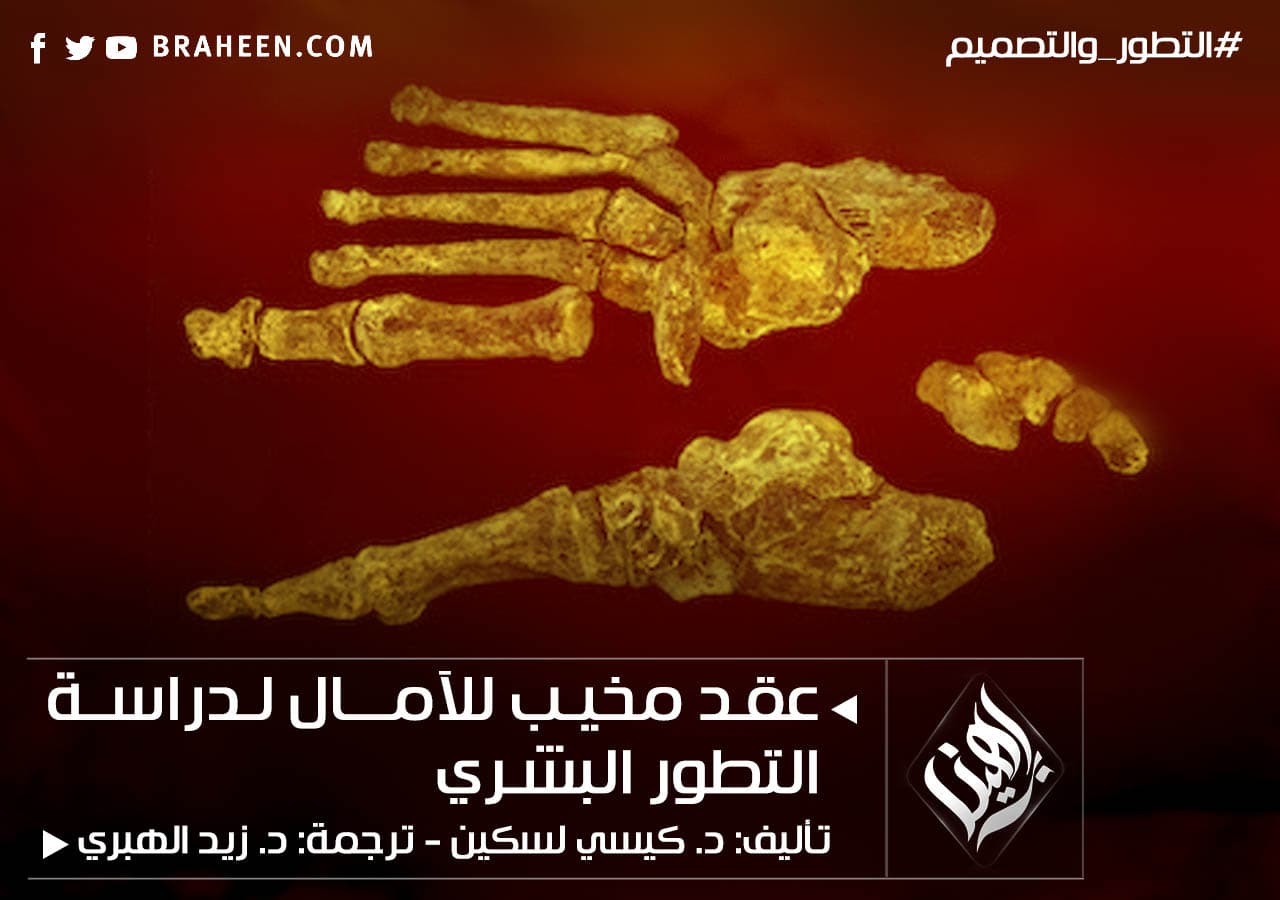
The first decade of the 21st century was a bad decade for the study of human evolution. The Smithsonian Institute recently published an article titled "This Decade's Biggest Discoveries in Human Evolution"[1].
A Disappointing Decade to Study Human Evolution
The first decade of the 21st century was a bad decade for the study of human evolution. The Smithsonian Institute recently published an article titled "This Decade's Greatest Discoveries in Human Evolution"[1].
Human evolution is one of the most vital areas of scientific research. The past decade has seen many discoveries that have expanded our understanding of our human origins. In celebration of the 10th anniversary of the “David H. Koch Hall of Human Origin” at the Smithsonian Institution, we show you some of the biggest discoveries in human evolution over the past 10 years.
What are the major discoveries of this decade? Have you provided new and convincing evidence of human evolution from lower primates? Indeed, some of these major discoveries have weakened the evidence of human evolution, while the rest of the discoveries are described as simple modifications of earlier theories, and have little bearing on the basic principles of ancient human science.
Old DNA.
The first major scientific breakthrough cited by the Smithsonian Institution is the discovery of ancient DNA. This is an important development in the burgeoning field of paleogenetics – showing the existence of different subspecies of very modern human-like groups such as Denisovans or Denisovans found in the last million years.
(1) The hypothesis that modern humans are descended from non-human, less human, or primitive species,
(2) The claim that these recently discovered "species of early humans" are quite different from ours.
It is true that we know the DNA of Denisovans, but what we now know is that Denisovans were human beings like us.
The second major discovery of the last decade was Homo naledi, which is also remarkable because it represents a huge storehouse of fossils of human ancestors, which adds much to our knowledge of the fossil record. At first, news reports described Homo naledi as "an ancestor of man".[3] But in 2017 it was found to be a few hundred thousand years old, which is 10 times smaller than what would be considered one of our evolutionary ancestors.
Bringing the dead out.
Another key claim about the Homo naledi species is that it buried their dead – which implies that these small-brained species are beginning to exhibit some sort of human-like behavior and intelligence. But there is considerable skepticism about this – see our article on Evolution News for review [4]. Homo naledi was an amazing fossil discovery, but we simply did not find evidence that it was a small-brained species with intelligence that would be suitable for humans.
In fact, the main theme of ancient anthropology in 2010 was to oppose new discoveries and analyses of ages of fossils that conflicted with the preferred evolutionary story.
She's shorter than expected.
The third major discovery recorded by the Smithsonian Institution for this decade is the discovery last year of a nearly complete skull of the supposed Australopithecus anamensis, dating back about 3.8 million years. Science Daily quoted one of the scientists involved in the discovery as saying: "We thought that Australopithecus anamenensis had gradually turned over time to Australopithecus afarensis" but because of the novelty of the fossil we left this belief. Beckley explained:
Such anagenetic evolution by only gradual transformations from type to type (without apocalyptic events) has already been predicted by Darwin's theory. Therefore, we need to expect to find some fossil evidence for this important process. But this evidence turned out to be out of reach (see below), and it was the case of the supposed transition from A. anamensis to A. avariensis that was "one of the strongest cases of metagenesis in the fossil record" (see below).
We will retell the story, discovering in 2006 the fossils of A. anamensis that predate A. afarensis, and this finding caused much fanfare. Archaeologists determined that it showed a direct relationship of a kind between the two species. Tim White and colleagues at the time wrote in Nature [6] that "the earliest described type of Astralopithecus is A. anamensis, a potentially powerful temporal type of Astralopithecus."
The last fossil discovered in an ancestral human hot spot in Africa allowed scientists to link the most complete sequence of human evolution to date with each other ... Co-author and Ethiopian anthropologist Burhan Asfaw said in a telephone interview from Addis Ababa: “We have just found the sequence of evolution – continuity over time.”
This supposed example of the gradual development of a direct ancestor/recent relationship was extremely important not only to Darwinists in the media, but also to ancient paleontologists. This is because it is so rare that they think we can find an example of such a thing; the direct relationship. A major review of human evolution by 2015 by Bernard Wood and Mark Grabowsky [8], published in The Great Evolution: Explanation and Evidence Highly Accepted.
Most hominin species, particularly early hominins, have no apparent ancestors and in most cases, ancestor/rear sequences (i.e. fossil time series) cannot be reliably constructed - two possible exceptions are mentioned below.
And guess what one of the two best examples is? A. anamensis evolved gradually and directly into A. afarensis:
At one time or another, each of the early hominids discussed above was presented as the "predecessor" of the later hominins, but we see that only two pairs of species are A. anamensis with A. afarensis (Kimbel et al. 2006), and P. aethiopicus with P. boisei (Wood and Schroer 2013), are convincing examples of ancestral/behind relationships (i. Anamenesis and the fossil hypodigm Hadar of the species Astralopithecus afarensis. This hypothesis was supported by the discovery of fossil evidence from Woranso-Mille in Ethiopia which is temporally and morphologically intermediate between A. anamenensis and A. afarensis (Hila Selassie et al. 2010).
But this example of an ancestor-behind sequence can no longer be used because the skull of A. anamensis discovered last year is 3.8 million years old, 100,000 years after the A. afarensis fossils appeared.
Why does that matter?
Well, as we all know, evolutionary biologists prefer to demonstrate direct gradual evolution rather than dotted equilibrium because the latter requires rapid evolution without shifts in fossils, while gradual evolution means that things evolve slowly, just as Darwin predicted. A paper published by White and colleagues (2006) promoted the evolution of A. anamensis to A. afarensis as a possible fine example of a form of "gradualization" or "regeneration" that outweighs "intermittent equilibrium":
Gould doubted that "punctuated gradualism" was rare. He thought, in contrast, that intermittent equilibrium (with speciation through "the formation of a new cladogenesis") was more common, but the demonstration of discontinuous equilibrium required the verification of synchronization and continuity of both ancestral species and their offspring. Gould also observed that "we can distinguish 'rapid evolution' epigenetics from branched speciation by applying the strong testability criterion to ancestral survival after a descending species has emerged. If the ancestor survives, new species have arisen by branching off. If the progenitor is not left, we should consider the case either as an undecided case, or as good evidence of rapid evolution - in any case, it is not evidence of intermittent equilibrium." (p. 795) These requirements have rarely been met in hominin fossils.
For the origin of Australopithecus, the phylogeny with a sudden wave of rapid directional change over a period of 200,000 years between 4.4 and 4.2 million years ago is still plausible given the geographic, temporal and morphological relationships between the Ar. ramidus type and the Australopithecus type anamenesis and our understanding of the anatomy and evolution of primate teeth.
Thus, they acknowledge that the requirements for gradual evolution are "rarely met in hominin fossils," but White and colleagues' 2006 paper predicted that this is a state of gradualism. They note that it is easy to test: "If the ancestor survives, the new species is created by branching out" – that is, by intermittent equilibrium.
Well, this 2019 skull discovery shows that the supposed ancestor survived, because A. anamensis apparently existed 3.8 million years ago, 100,000 years after its supposed ancestor A. afarensis actually existed.
We further explain that A. anamenensis and A. avariensis differ more than previously known and that these two species overlap for at least 100,000 years – contradicting the widely accepted hypothesis of regenerative epigenetics...More importantly, the discovered skull MRD shows that despite the widely accepted age hypothesis, A. avariensis may not have emerged as a result of phylogeny as early as 3 million years ago.
Although they still believe that there is a possible dynastic relationship between anamenesis and afarensis, we must now strike this example from the list of "dynastic gradients" or what Wood and Grabowski called "clear examples of ancestral/behind relationships (i.e., examples of regenerative epigenetics)." or as reported by Science Daily [11]:
This temporal overlap challenges the widely accepted idea of a linear transition between these two early human ancestors...We believed that A. anamensis gradually shifted to A. afarensis over time.We still believe that these two species had a ancestor-behind relationship, but this new discovery suggests that the two species had been living together in the Afar region for some time.[emphasis added]
A third example
In addition to A. anamenensis, A. afarensis, and Homo sapiens, a third example of the first decade of the 21st century was found by chance. The ages of hominin fossils posed problems for the Standard Evolutionary Model. We reported in an article we published[12] also last year that a study of Australopithecus sediba and a hominin fossil record published in the journal Science Advances concluded that there was a chance of less than 0.1%.
There are three additional major discoveries made in the decade recounted by the Smithsonian Institution. Relating to minor revisions of ages that do not significantly affect the general evidence of human evolution:
Our species, Homo sapiens, is now 300,000 years old.
(2) that stone tools now date back to 3.3 million a year ago, and
Modern humans are now thought to have left Africa earlier, due to the jawbone in Palestine dating back to 174,000-185,000 years ago.
We say again that the first discovery is only a slight modification of previously adopted dates, and the second era may be very valid though the exact ages of the instruments are difficult to determine. As for the third discovery, Smithsonian Magazine puts it as follows:
In 2018, researchers announced the discovery of an upper jaw in Palestine resembling the jaw in our species, Homo sapiens as old as the jaw is 174,000-185,000 years old. This discovery – along with other discoveries from China and Greece – indicates that Homo sapiens moved for a short time in Eurasia before the global migration began 70,000 years ago.
Commenting on 2018 as a "horrific year" for the anthropology of ancient fossils, Gunter Bickley writes:
The authors of this new study describe a recent re-history of a human jaw discovered in 2001 in the Meslieh Cave in Mount Carmel in Palestine. After a very careful re-evaluation, using various high-tech methods, a large team of researchers confirmed that it belonged to Homo sapiens. However, they reached a new confirmed and surprising date for this specimen placing it between 177,000 and 194000 years before the present, making it the oldest evidence of Homo sapiens outside Africa. Later. New findings and other recent discoveries show that such hypotheses to justify reality and explain conflicting evidence are no longer possible. For this reason Professor Hershkovitz says, "This discovery has changed the whole concept of modern human evolution ... the whole narrative of human evolution must be set back by at least 100,000-200,000 years." The author of the article comments, "With Mislea's cave jawbone, the history of human evolution is being rewritten" (Borschel-Dan 2018)
Where have we heard that before? Dienekes Pontikos (2018), who runs one of the most popular ancient anthropology blogs, points out the new findings entitled “Out of Africa: A Theory in Crisis” and notes that “you have to push for the traditional rethinking of man’s exit from Africa.” Listen, listen!
An initial couple?
Unfortunately, the Smithsonian's list of the most important discoveries of the 2000s did not include a much more important story that answered a question that concerned a wide cross-section of the population: Did humans originate from a first pair? Qualified scientists between 2016 and 2019 developed for the first time a model for rigorous testing of the long-supposed evolutionary view that modern humans originally descended from a large, recent pair of thousands of individuals.
According to the final paper of this study [14], published in 2019 by biologist Anna Gouger and mathematician Ola Hjssjer in the journal BIO-Complexity, because in human genesis research "interpreted some common assumptions that are used to facilitate action as if they were conclusions that arose from the data, without testing the hypothesis of a scientifically single pair." Their model attempts to test the question if humanity could have originated from a prime pair, and seeks to do so:
The SOC model [of originating from a single pair] that we study differs from the mainstream interpretation of human origin in only two assumptions: (1) that we have continuously evolved from non-humans in a large population.
(2) that genetic diversity is always due to germline gene mutations.
Rather than imposing on models the assumption that genetic diversity arises only from sex cell mutations, and that population sizes must always be very large, their paper allows for a pair of protohumans with "primitive diversity."
This study is a great example of how to allow a model to be tested through the fair implementation of its boundary conditions. It explains exactly why it is wrong to use circular thinking to first assume that undirected evolutionary boundary conditions are the only options, and then to conclude that other models are definitely wrong. After applying the boundary conditions established by researchers and applying population genetics mathematics, the authors concluded that "the sum of what we know scientifically about genetic data, may have come from a single pair, so that all humans can survive today.
Of course, the Smithsonian Institution is fully committed to an evolutionary view that is not actually directed at human origins, as the Hall of Human Origins in Washington, D.C., and their traveling exhibition of human origins have shown in recent years. It is no surprise that they have ignored studies that challenged mainstream evolutionary thought, and are positively consistent with discoveries in the 2000s that actually weakened the evidence for human evolution.
Perhaps we will have this dialogue again in ten years – and we may all then give the Smithsonian a more objective analysis of the evidence. Who knows what the next decade will bring?
Notes:
The Smithsonian Institution's "The Biggest Discoveries of This Decade in Human Evolution"
https://www.smithsonianmag.com/blogs/national-museum-of-natural-history/2020/04/28/these-decades-biggest-discoveries-human-evolution/
2 – The news of Homo Nalidi as reported by CNN:
https://www.cnn.com/2015/09/10/africa/homo-naledi-human-relative-species/
Disappointment: Homo naledi appears to be younger than previously thought
https://evolutionnews.org/2017/04/disappointment-it-looks-like-homo-naledi-is-younger-than-previously-thought/
A review of Homo naledi shows how ancient paleontologists applied the principles of intelligent design:
https://evolutionnews.org/2018/04/studying-homo-naledi-fossils-paleoanthropologists-apply-intelligent-design-principles/
Genter Beckley's article:
https://evolutionnews.org/2019/09/apeman-waves-goodbye-to-darwinian-gradualism/
Tim White and his colleagues in Nature magazine:
https://www.nature.com/articles/nature04629
7- News of the discovery of the fossil in the Associated Press, entitled the discovery of a fossil that fills a gap in human evolution:
http://www.nbcnews.com/id/12286206/ns/technology_and_science-science/t/fossil-discovery-fills-gap-human-evolution/%22%20%5Cl%20%22.XqogwS_MxTZ
Review of Bernard Wood and Mark Grabowski:
https://link.springer.com/chapter/10.1007/978-3-319-15045-1_11
Book (Major development: explanation, reasoning and evidence):
https://www.google.com/books/edition/Macroevolution/9YutBgAAQBAJ
10- Nature article that mentioned the discovery of the skull:
https://www.nature.com/articles/s41586-019-1513-8
The cranial morphology of the earliest known hominins in the genus Australopithecus remains unclear. The oldest species in this genus (Australopithecus anamensis, specimens of which have been dated to 4.2–3.9 million years ago) is known primarily from jaws and teeth, whereas younger species (dated to 3.5–2.0 million years ago) are typically represented by multiple skulls. Here we describe a nearly complete hominin cranium from Woranso-Mille (Ethiopia) that we date to 3.8 million years ago. We assign this cranium to A. anamensis on the basis of the taxonomically and phylogenetically informative morphology of the canine, maxilla and temporal bone. This specimen thus provides the first glimpse of the entire craniofacial morphology of the earliest known members of the genus Australopithecus. We further demonstrate that A. anamensis and Australopithecus afarensis differ more than previously recognized and that these two species overlapped for at least 100,000 years—contradicting the widely accepted hypothesis of anagenesis.
Science Daily article:
https://www.sciencedaily.com/releases/2019/08/190828140118.htm
Evolution News article about examining the histories of human ancestors:
https://evolutionnews.org/2019/05/another-human-ancestor-falsified-study-puts-australopithecus-sediba-back-in-the-ground/
13- Gunter Beckley article about 2018:
https://evolutionnews.org/2018/12/3-of-our-top-stories-of-2018-for-paleoanthropology-another-annus-horribilis/
Anne Geiger's paper in BIO-complexity:
https://bio-complexity.org/ojs/index.php/main/article/view/BIO-C.2019.1
- Dr. Casey Luskin - Translated by: Dr. Zaid Al-Habri
—
Source: Brahin Center website - Published 2020-05-01 (archived at the Internet Archive)
https://braheen.com/articles/evolution-design/عقد-مخيب-للآمال-لدراسة-التطور-البشري