
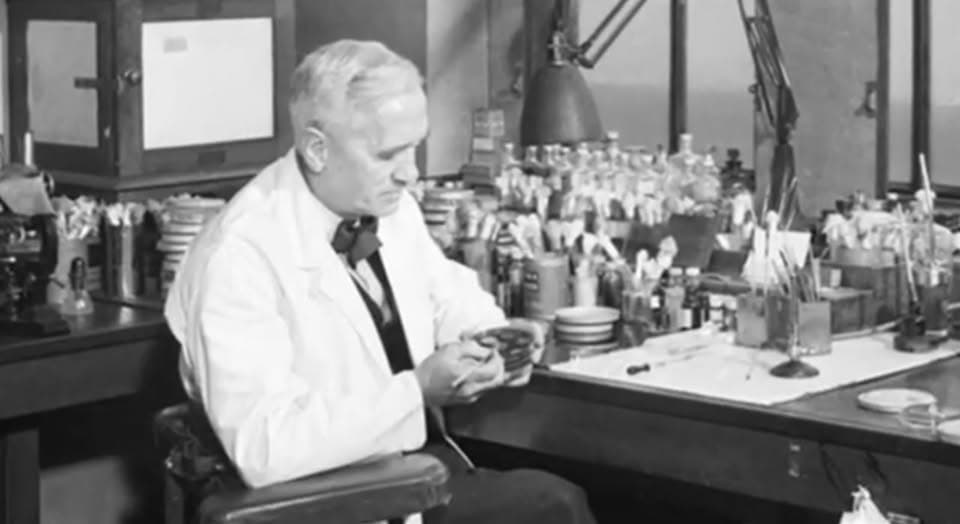
In 1928, English microbiologist Alexander Fleming was growing staphylococcus in his laboratory, and he noticed that a petri dish had been contaminated with a fungus.
In 1928, the English microbiologist Alexander Fleming was growing staphylococcus in his laboratory, and he noticed that a petri dish had been contaminated with a fungus.
Remarkably, there were no cluster colonies around the mold, suggesting that the latter was producing a substance that killed or disrupted bacteria. Mold was a type of penicillium, hence Fleming called this substance "penicillin".
Fleming was not a chemist, and was not able to purify and make a concentrated substance of penicillin enough to benefit medically. It remained until the 1940s, until he succeeded...
The rest of the story you find in the new episode.
YouTube: https://youtu.be/0LcMlv2qmaY
Facebook: https://fb.watch/hv7wEhEELG/
—
Source: Published on Facebook's "Braheen Center" page