
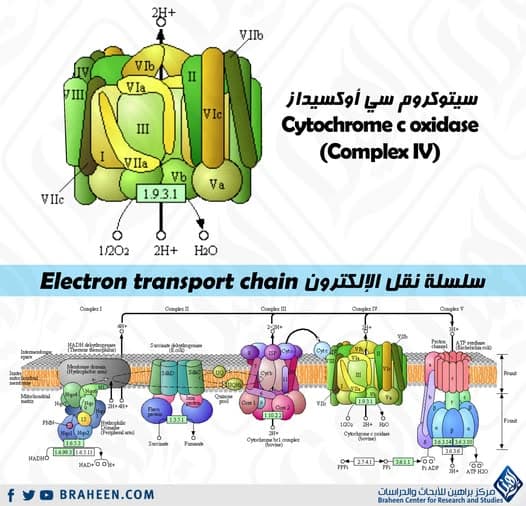
One of the most important enzymes that takes advantage of the oxygen-handling properties of transition metals is cytochrome C oxidase, the last member of the respiratory complex, responsible for the last axial reaction in metabol...
One of the most important enzymes that takes advantage of the oxygen-handling properties of transition metals is cytochrome C oxidase, the final member of the respiratory complex, responsible for the last axial reaction in oxidative metabolism, which involves the addition of electrons swimming in the respiratory complex to oxygen and hydrogen atoms, and this enzyme takes up position on both sides of the bilayer lipo membranes of mitochondrial production.
Frieden comments on the importance of this enzyme: "If a biochemist is asked which enzymes are most important for all life, he will often choose cytochrome C oxidase, the enzyme found in all air cells, which provides oxygen for the oxidative mechanism that produces energy, which we need for physical activity and biochemical synthesis. This enzyme may be considered the maximum complement of iron function with copper in biological systems. The final stimulus, in which electrons reduce oxygen to form water.
Strangely enough, cytochrome C oxidase also contains two other atoms of the two metals, zinc Zn and magnesium Mg, although their function is essentially synthetic. The activity of this impressive micromachine depends on the unique properties of the atoms of four metals: Fe, Cu copper, Zn zinc, and Mg. In addition to these minerals, this machine is made up of essentially any other protein.
- Dr. Michael Denton, Nature's Destiny
More: https://braheen.com/publications/قدر-الطبيعة-قوانين-الحياة-تفصح-عن-وجود-الغاية-في-الكون
—
Source: Published on Facebook's "Braheen Center" page
https://www.facebook.com/braheen.org/posts/pfbid02oMGPLbqMWbn8taZwVmBZ4HrmYXNJ8iUYwxbyJk4zRsGkSpdjzSuYhpWPDSCpK3gxl