
After completing his Ph.D. at Caltech in 1992, Douglas Axe moved on to become a postdoctoral researcher at the University of Cambridge, working at Alan Fersht’s lab at the University of Cambridge, then moving on to the Centre for Protein Engineering at the University of Cambridge.
After finishing his Ph.D. at Caltech in 1992 Douglas Axe moved on to become a postdoctoral researcher at the University of Cambridge, working in Alan Fersht's lab at the University of Cambridge, and then moving to the Protein Engineering Center at the renowned Medical Research Advisory Center in Cambridge, where people such as Francis Crick, Max Peretz, John Kendrew, and Fred Sanger worked in the early 1960s.
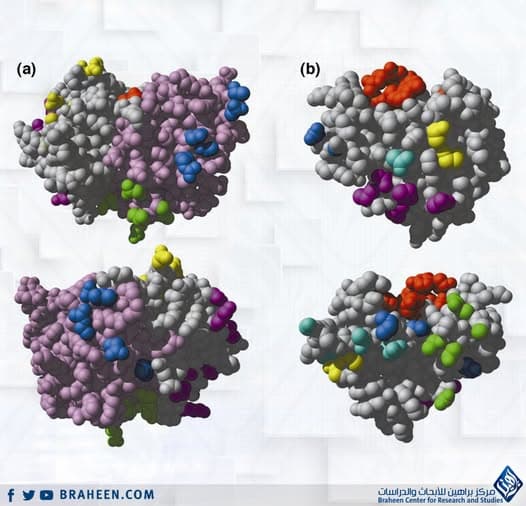
In 2000 he published in the Journal of Molecular Biology a paper entitled: "Extreme functional sensitivity to conservative changes in amino acids on the outer surfaces of enzymes", Part 301:585-595 (2000).
The paper explores the functional sensitivity of enzymes to amino acid changes maintaining exogenous positions. Axe challenges the prevailing view that functional limitations on protein-coding sequences are minimal in inactive exogenous positions and explains the importance of the sequence context in determining whether alternatives are functionally acceptable.
The paper discusses the problem of how amino acid sequences encode functional proteins and how biological function constrains protein sequences. It highlights the currently accepted answer that the constraints are completely loose, particularly in positions on the outer surface of a protein that are not directly involved in binding or catalysis. The origins of this low-constrained viewpoint can be traced back to the first systematic examination of the protein family, globins, which revealed a high degree of sequence variation in general and a particularly high degree of variation in surface positions.
The paper uses two methods to test the assumption that the set of acceptable residues in each location is independent of the context of the overall sequence.
1. Highly conservative alternatives to exogenous embolism, none of which will cause significant functional disruption, are combined on their own, until about one in five is altered. This has been found to cause complete loss of function in the vivo of two non-bacterial RNase monoenzymes and TEM-1 b-lactamase field.
2. A set of 50% identical TEM-1 field hybrid sequences and proteus mirabilis b-lactamases have been created. These hybrid species correspond to the TEM-1 field sequence except for an area at the C-terminus, where they are random parent compounds. All of these hybrid species are biologically inactive.
Parnas is a bacterial ribonuclease enzyme that has been used in the basic study of hydrophobicity. It is a single-domain enzyme that breaks down RNA molecules. On the other hand, the TEM-1 domain of TEM-1 b-lactamase is a single-domain enzyme that confers bacterial resistance to penicillin-like antibiotics. It belongs to a large class of homologous enzymes, class A b-lactamases can be identified.
The results of the paper show that the function of the enzyme places severe limitations on the identities of the drunks in places that exhibit evolutionary variation, and in non-active external locations in particular. The study shows that the complete loss of activity demonstrates the importance of the sequence context in determining whether alternatives are functionally acceptable. Therefore, homologs that share less than two-thirds of sequence identity are likely to be seen as characteristic designs with respect to their own sets of optimization features.
By showing that functional limitations are the rule, rather than the exception, the question arises as to the ability of chance to produce sequences that meet these conditions in the first place. Axe himself asserts that this study adds to the evidence for intelligent design: “I concluded in a paper published in the Journal of Molecular Biology in 2000 that enzymatic catalysts entail “strict limitations in their sequences.”
Douglas D. Axe, “Extreme Functional Sensitivity to Conservative Amino Acid Changes on Enzyme Exteriors,” Journal of Molecular Biology, Vol. 301:585-595 (2000).
—
Source: Published on Facebook's "Braheen Center" page
https://www.facebook.com/braheen.org/posts/pfbid0fCpko5kUpMEwkix6WchJVTSjsAhTQVTZQwiKuWyaemq72PMQXZFMa7oHwk7Cr35sl