
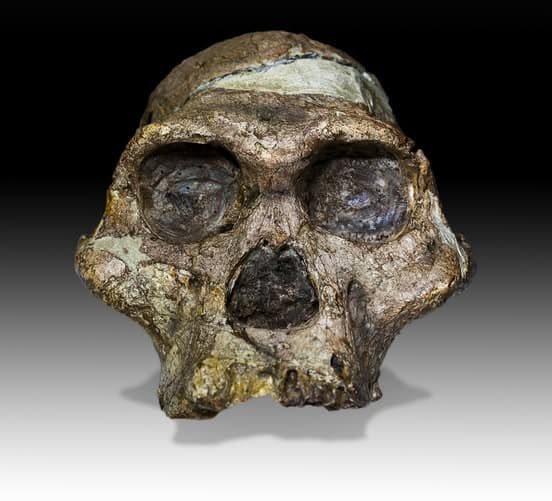
While Sahelanthropus, Ororin and Ardipithecus ramidus appear to be controversial due to the fragmentary nature of the specimens available, there are many specimens sufficient for southern apes to give us...
While the coastal ape species Sahelanthropus, Ororin, and Ardipithecus ramidus appear controversial due to the fragmentary nature of the available specimens, there are enough specimens of southern apes to give us a clear idea of what they look like.
Southern apes Australopithecus are an extinct group of great apes that have lived in Africa for more than 4 million to 1 million years, and multiple taxonomic models of southern apes have been built by taxonomists (human paleontologists who tend to break down fossils into many species within the fossil record) and aggregators (human paleontologists who tend to group them into as few species as possible. The strong and boisei species have larger and stronger bones than the rest of the species, and are sometimes classified in the genus Paranthropus, and according to traditional evolutionary thinking they represent a branch that lived and went extinct without a trace, while the other two weaker species – African and Goblin, which includes the famous fossil Lucy – lived earlier and are classified in the genus Southern Apes, and are believed to be direct ancestors of humans.
One of the most famous fossils of the southern apes known to date is Lucy because it is one of the most complete fossils of all hominids, and it seems to be a monkey-like creature that walks on two legs and is fit to be a typical ancestor of humans.
The fossil Lucy came to the Pacific Science Center in my hometown of Seattle in 2009, and once I entered the room where the fossil found a thick glass box containing these bones, and I was shocked by the incompleteness of the bones, 40% of the bones are only discovered, and the bulk of the structure is a supportive metal structure. (See Figure 3.4) It was possible to recover only a little useful from Lucy's skull, and yet it is the most important specimen so far.
There is some reason to doubt that Lucy represents one individual or belongs to one sample. In a video at the gallery, fossil discoverer Donald Johansson admits that he found fossil bones scattered on the foot of a hill, and foreign bones at the site.
- Casey for a knife.
—
Source: Published on Facebook's "Braheen Center" page
https://www.facebook.com/braheen.org/posts/pfbid024RiGvatxQ6fAEjM7Fgnvs8JK7PFSkTD7gLor7vYnTCBGMpQTFo2iuRDVWLei6x2Cl