
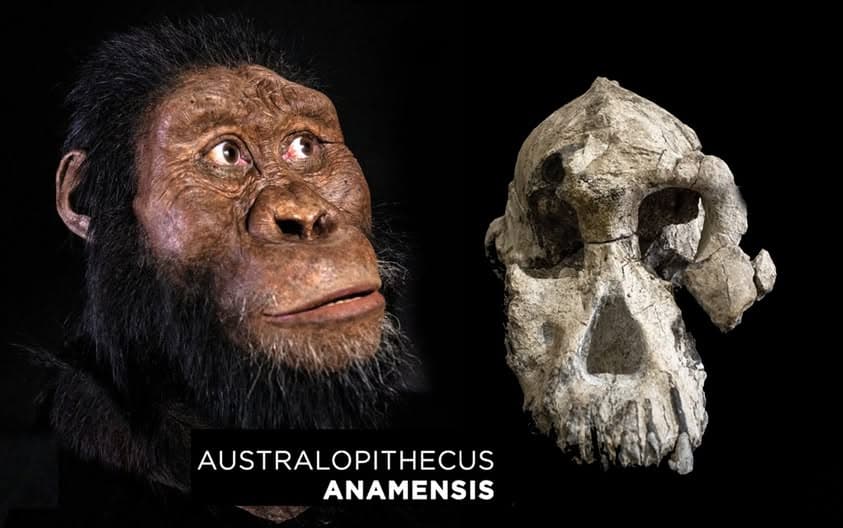
In April 2006, National Geographic magazine published an article entitled “Scientists say we found a fossil that represents the missing link in the chain of human evolution”58, in which it announced the discovery of what the Associated Press called “the most complete chain of human evolution to date.”
In April 2006, National Geographic published an article titled "We Found a Fossil Representing the Missing Link in the Human Evolution Chain", which announced the discovery of what the Associated Press called "the most complete chain of human evolution to date".
What's already found?
According to the scientific paper announcing the discovery, these claims are based on several isolated medium-sized teeth, and the term "medium-molecule force" has been used in the paper, if a pair of 4 million-year-old medium-sized teeth is the most complete chain of human evolution to date, it is self-evident that the evidence for human evolution is extremely modest.
The use of the word “missing link” is a retrospective recognition of initial ignorance. Evolutionists admit that there are large gaps in the evolutionary tree even if they think they have found the evidence that fills those gaps.
"The origin of southern apes - a genus often considered to be a precursor of the human genus Homo - is a central problem in human evolutionary studies, with southern apes being markedly different from the African apes now alive and from candidate ancestors of great apes such as the Arde, Ororin, and coastal ape Sahelanthropus."
Following these comments, an article on MSNBC states: "Until now, scientists have sporadic images of human evolution scattered around the world."
Evolutionists, who retroactively admit ignorance, risk that the evidence that supposedly filled the voids is unconvincing in itself, and that’s when they rank a pair of medium-sized teeth as “the fundamental solution to the central problem in the studies of human evolution,” and “the most complete chain of human evolution to date.”
In addition, the southern apes of Australopithecines differ markedly from their supposed ancestors – the Arde, the Orion and the coastal apes – and, given the fragmentation and mystery of the ancient specimens, the deeper objective analyses of early human evolution show the same as Tim White's "black hole" in the fossil record.
More: https://braheen.com/publications/العلم-وأصل-الإنسان
—
Source: Published on Facebook's "Braheen Center" page
https://www.facebook.com/braheen.org/posts/pfbid051TbgS1UhEGeNQ8XYfPzwh6QGH2kxifu4zeDqN6nAN8dAcCDUWvRdqbWNaTneBAJl