
Note to the reader "Man has long wanted to use the Final Cause method, which is the teleological concept of the end - the goal or design in one of its many forms - to fundamentally explain the phenomenon of the living world. This will will remain what humans have eyes to see...
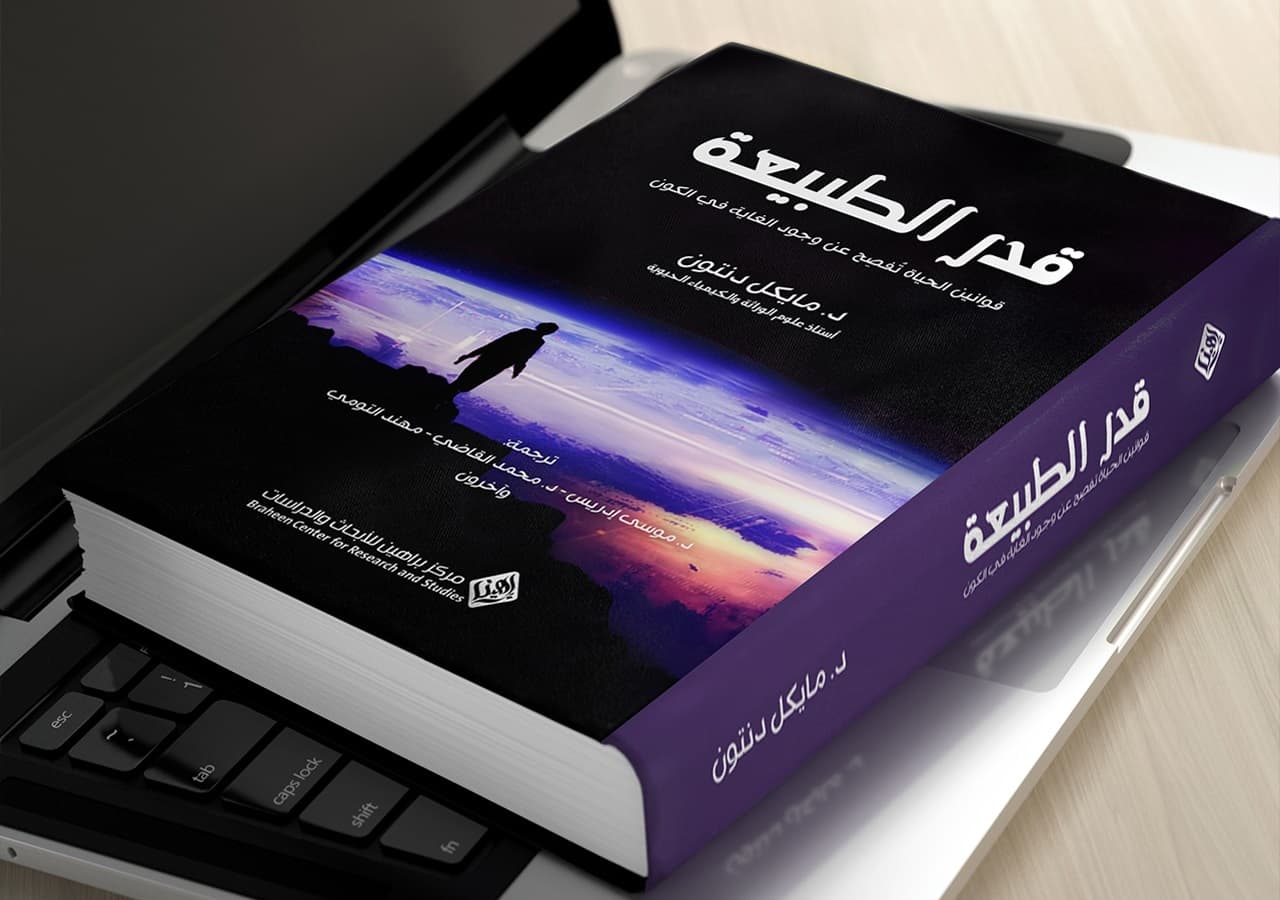
Nature’s Destiny: The Laws of Life Reveal Purpose in the Universe — Author’s Introduction
Note to the reader
“People have long sought to explain the living world through final causes: a teleological conception of ends, goals or design in its many forms. This desire will endure as long as people have eyes to see or ears to hear. Galileo’s approach in physics was like Aristotle’s; so were John Ray’s approach in natural history and Kant’s in philosophy. It is a general and powerful method because it points to an insight deeply rooted in human hearts, just as the love of nature is rooted there.”
Darcy Wentworth Thompson, On Growth and Form, 1942.
The purpose of this book:
First, to provide scientific evidence for the belief that the universe is uniquely suited to life as it exists on Earth, and suitable for beings with very similar design and biology to our species; Homo sapiens.
Second, to demonstrate that this "unique propriety" displayed by the laws of nature is fully consistent with the ancient religious conception of the existence of the teleological cause in the universe, being designed in its entirety for the purpose and primary purpose of life and human beings.
Although this book, obviously, has many semantic implications, my intention at first was not to prove the existence of the system (design) in particular, but as I delved into the subject and reviewed the successive drafts of the book's manuscript, it became clear that the laws of nature are strictly tuned to fit life on Earth, and the image that emerged from the research provided strong support that does not require additional proof to support the traditional view of the universe and characterized by the view of nature.
The basic thesis of the book – that this universe is uniquely suited to human existence – is not innovative, of course, this thesis was centuries before the birth of modern science formed the fundamental axes of medieval Christianity, and this thesis has recently reappeared in various scientific fields, the most striking of which are the fields of physics and cosmology. Readers of physicists such as Freeman Dyson, Fred Hoyle, and Paul Davies are no doubt aware that in the last few decades many physicists have pointed out that the existence of life in the universe depends precisely on the maintenance of "the laws and constants of physics" on their current values, and that these values are so critical that they have become increasingly important. A number of famous authors argue that the universe seems in every respect to be infinitely fine-tuned or made to fit our existence.1 As Paul Davies points out in his book Accidental Universe: "If nature were inclined to choose a slightly different set of numbers, the world would be a very different place, and perhaps we wouldn't be here to see it." The views of Davies and other scholars have been widely popular due to their notable support for the traditional teleological view of the world found in major religious traditions.
We have a fundamental problem with any attempt to prove the centrality of life or man in nature based on evidence taken from physics only. Even if this evidence is sufficient to prove the universe's ability to fit complex chemistry, solar systems, or even intelligence, but it is not necessarily sufficient to prove in some way that the universe uniquely fits this particular mode of biological life as it exists now on Earth, i.e., that it exists to fit organisms built of carbon compounds that rely on water and here's DNA.
Davies carefully attempted to distance himself from any claim to human centrality in the cosmic system: "Where are human beings in this great cosmic plan? I don’t think so.”3 In his last book, he explicitly declared, “I am not saying that we [the Homo sapiens] are essentially written into the laws of physics,”4 and goes on to say, “We should not expect that the chemical basis of our life is similar to alien life...It is not necessary, for example, to demand liquid water or even carbon. We can expect strange forms of life as beings floating in the dense atmosphere of Jupiter, or swimming in the liquid nitrogen seas of Titan."
Unlike Davies and others, I believe that the evidence strongly suggests that the universe is uniquely suited to only one type of biology – those on Earth – and that the phenomenon of life cannot arise from any strange chemistry or form of matter.
To defend the universe-specific hypothesis of biological life on Earth, we need to consider a wide range of laws, phenomena, and natural processes, all of which are completely outside the realms of physics and cosmology, and relate exclusively to the biological field, phenomena such as the thermal properties of water, the properties of carbon atoms, the decay of carbon dioxide, the self-assembly properties of proteins, the nature of cells, and so on.
This book is divided into two main parts: the first of which presents the evidence that the laws of nature are uniquely suited to becoming or having the ideal carbon-dependent lifestyle that exists on Earth, and the chapters of this part deal with evidence from various fields of biological science, from molecular biology to mammalian physiology. The chemical and physical properties of the basic components of the cell were systematically reviewed in terms of water, carbon dioxide, bicarbonate, oxygen, DNA, proteins, transition metals, cell membrane, etc. It encompasses all of its physical and chemical properties. Evidence from other complex fields of science that attests to the suitability of Earth’s hydrosphere, the suitability of the sun’s electromagnetic radiation, and the suitability of the periodic table of elements of a carbon-dependent lifestyle such as that on Earth has also been reviewed. The book also shows that the existence of certain high-end forms of life – large, airy, warm-blooded terrestrial vertebrates – depends crucially on the properties of such simple life as water, carbon dioxide, and oxygen.
The proof that we came up with in the first part to infer the universe’s unique suitability for life’s evolution will naturally lead us to the next proof that we have shown in the second part; that the universe is also suitable for the beginning and evolution of life, i.e. for the origin of life. It is difficult to escape the logic of this connection, because if we also accept the existence of life forms on Earth – micro and macro – based on the wonderful set of physical and chemical adaptations.
Or to put it another way, if the laws of nature are strictly controlled to facilitate life in the form of a unique group of carbon-dependent organisms, both simple and complex on the planet's amphibious surface, then it is logically accepted that the formation of these organisms through the process of evolution was also determined by natural law.
To be sure, evidence of the universe’s unique suitability for life is now more compelling than evidence of the universe’s suitability for life. However, despite the absence of direct evidence to believe that life is predestined in the structure of the universe, many features of the universe seem logically justified if life is somehow preprogrammed by the laws of nature. Events occurring in the universe, such as the manufacture of carbon and other fundamental atoms of life, which are more complex than in the stars of the universe with complex processes, and the interstellar vacuum contains huge amounts of organic carbon compounds7, and meteorites such as the Murchison meteorite, which contains significant amounts of amino acids, the building blocks of life, and planets such as Earth. Perhaps it supports carbon-dependent life – if not everywhere in the universe9 – all these facts make strong sense if life is a natural phenomenon programmed from the beginning in nature, destined to emerge and evolve in any suitable planetary environment.
We cannot argue and convince that the components of life are uniquely designed to fit their roles, except by a detailed discussion of the relevant scientific facts, and this holds true in any work similar to the proof of teleological reasoning.
For example, the proof will not be that the components of the wristwatch are all qualitatively designed to work together and give time unless we understand a little bit of the structure and work of that watch, we must open the wristwatch and observe the mechanisms within it, especially the reciprocal suitability of the teeth of different gears with each other, and we have to understand something about the way the technology works in general. We need to understand clearly what William Bailey said in his famous statement about the wristwatch: For this reason, the presentation of evidence in a book of this kind is not an easy matter, because it is only with a relatively detailed and profound presentation of the relevant scientific facts that it is possible to accurately estimate the nature of these mutual adaptations.
Despite the specialized nature of many sections of the book, but I believe that those who have biological and chemical information from the level of secondary school can understand most of the topics mentioned, and even a committed reader who has not received any scientific training can understand the meaning of the guide in most chapters of the book, although this has to go beyond some of the most technically complex sections, because some chapters need a little scientific culture.
I have also tried to arrange the presentation of evidence, so that several chapters form a somewhat independent unit, which the reader can therefore understand without referring it to the rest of the chapters of the other sections or to the inferences therein, and I hope that this will bring the book closer to the non-specialist reader. Finally, as I have already warned, each chapter begins with a summary written in a different font, which may allow the non-specialist reader to override it.
In addition, as in similar proofs, given the cumulative nature of the evidence, which takes its strength from the increasing number of observed adaptations, the need arose to present and discuss as many of these adaptations as possible, and the proof is convincing by presenting a large number of independent inferences, each of which was drawn from a large number of different scientific fields, so that they all point to the same direction, this brings us into some repetition, which is a problem for some readers.
Since the validity of inference is based on the multiplicity of independent methods as a source of evidence, the resultant conclusion is constant, and its existence is not threatened by a response such as that the overall picture is not yet complete, or that this phenomenon or the "emergence of life or the mechanism of evolution" is not yet understood. This is similar to the clarification of the total picture of a picture cut long before the completion and completion of the parts of the composite picture, so the proof I mention in this book does not need to explain everything.
However, there is no doubt that critics have a wide alternative to counterattack, they can argue that I was selective in choosing the forms I discussed, and they are right, but the responsibility for criticizing the evidence here lies with them, because they have to show us a possible field that somehow allows the possibility of life other than life in the universe, or they have to offer a better alternative to an element of life such as water or carbon dioxide, etc. Develops detailed prototypes of such theoretical forms.
It is rare to see interest and debate on the issue of the universe’s suitability for life within the general line of biology since the days of the Darwinian Revolution, and the idea has actually gone viral in many of the English-speaking world’s communities. During the 20th century, this tradition survived by a number of rulers of biologists, such as Lawrence Henderson, professor of biochemistry at Harvard University during the first quarter of the 20th century, who authored the great classic The Fitness of Environment, 1913. Thompson is the author of the other great classic On Growth and Form (1942), including George Wald's father, professor of biology at Harvard in the 1950s and 1960s, and the discoverer of the role of vitamin A in vision, which is also a major reference in photoreception chemistry. A. E. Needham is an animal scientist and author of the excellent book The Uniqueness of Biological Materials (1965),14 including Carl Pantin, professor of zoology at Cambridge and author of The Links Between The Science, published in 1968.
The chapters in which I mention the properties of water, carbon, oxygen, and carbon dioxide in this book are largely based on Henderson's book "Environmental Suitability", and can even be considered to a large extent the updated version of this great classic work, according to contemporary information, and the next important source, to which I have referred in a number of chapters, is Needham's book "The Uniqueness of Biological Materials".
A recent book I invite to compare to my own, Stuart Kauffman’s book, “We began to discover the universe at home in the Universe,” in which he tried to prove that the bulk of evolution was determined and driven by the self-regulating properties of complex systems.16 There is no doubt that Kauffman’s findings are more than a hint of a teleology, and his general conclusion is almost consistent with what he said, for example.
Another book that calls for comparison is Vital Dust, whose author, the Nobel Prize-winning biologist Christian de Dove, concludes that he has chosen the position of being a meaningful universe, arguing for the habitability of the universe to the origin and evolution of life, and arguing for the inevitability of evolution from simple to complex life forms in general.
Because our book offers a teleological interpretation of the universe with clear intellectual implications, it is important to emphasize first that the reasoning presented here is entirely consistent with the nature of modern science; that is, that the universe is a connected unit whose outcome can be fully understood by human reasoning, and that all phenomena, including life, evolution, and the origin of man, can ultimately be explained in natural scientific terms.
This assumption is quite the opposite of the so-called special creationist school, because living things are not, according to the theory of special creation, natural forms of origin and design based on the laws of nature at the beginning, but they are seen as emergency forms, which are conceptually similar to the manufactures of man, and are the result of a series of unnatural actions that include direct natural intervention in the course of nature, and each of them depends on the disruption of the law of nature.
More broadly, therefore, the teleological reasoning presented here is contrary to the cosmological view based on special creationism, and in the final analysis we find that the evidence for one is the opposite of the other, and the stronger the evidence is to believe that the world is pre-designed for a specific purpose, life, and that design is based on the laws of nature, the less credible the cosmological view based on the special creation paradigm.
Paradoxically, both – i.e., Darwinian cosmological view and cosmological view based on special creation – have worked on one basic model, namely that life is an accidental phenomenon of nature, neither necessary nor essential, while the proponent of the idea of special creation sees living things made for the engineered god – the divine watchmaker – The Darwinist sees beings as products of chance and selection, and both views view life as an emergency. Traditional religious academic thinking in the 20th century has completely abandoned traditional natural theology, and many of these academics argue that "religious and scientific assumptions fall into different (epistemological) spaces of knowledge. Neo-orthodox thinkers thus construct the same wall of religion and science."21 Some liberal theologians have recently explored the relationship of science to theology22. Their purpose was to show how to believe in God and accept the results of science at the same time, and their work was not to infer that the facts of science prove that the laws of nature are uniquely predestined to create life on Earth, including complex forms such as our species.
One final point I must make at the beginning of the book, is that I use the term anthropocentric in the text of the book in its purely general sense. The cosmic ends I have envisioned are evolved carbon-based life forms from hominins, not necessarily our own unique, sane species in particular, and there is currently no evidence to prove that the laws of nature are uniquely and accurately suited to all the details of contemporary human biology as we see them in our species today.
As a final analysis, we say that the teleological vision that I present and defend in this book is scientifically useful because it provides scientific knowledge related to human existence, by which modern science unites the universe and man according to teleological doctrine, and makes the follow-up of scientific information more than the value of an abstract process, it is vital and central to human spiritual and cultural life.
Michael Denton
Danyden, November 1996.
Margins:
[1] Moon following Pluto. (translator)
The second says that there is a system of the universe that has an end, and behind it lies a wise force of knowledge. This second position is divided into various branches, including what says the literality of Genesis from the Torah, and what believes in creation without regard to the literality of the texts, and the authors of creation differ on degrees.
In a television interview with Denton, he stated that he pushes scientific interpretation to the utmost, and does not deny the possibility of things we cannot explain. It is worth mentioning that there is a contradiction between the theory of teleological respect for the law of nature and the special religious theory that sees the violation of natural law as necessary to prove its existence, and this is more apparent in Western thought and the Islamic view of the system.
Sources:
1. P. C. W. Davies (1982) The Accidental Universe (Cambridge: Cambridge University Press). See also J. D. Barrow and F. J. Tipler (1986) The Anthropic Cosmological Principle (Oxford: Oxford University Press).
2. Davies (1982); see Preface.
3. P. C. W. Davies (1995) "Physics and the Mind of God," the Templeton Prize Address, First Things, August-September, pp. 31-35.
4. P. C. W. Davies (1995) Are we Alone? (London: Penguin Books), pp. 70. 85.
5. Ibid.; see p. 25.
6. P. C. W. Davies (1992) The Mind of God (London: Penguin), p. 232.
7. F. Hoyle and C. Wickramasinghe (1996) (London: Orino Books); see chap. 4.
8. S. L. Miller and L. E. Orgel (1996) The Origins of Lift on the Earth (Englewood Cliffs, N.J.: Prentice-Hall); see chap. 15.
9. S. v. W. Beckwith and A. 1. Sargent (1996) "Circumstellar Discs and the Search for Neighboring Planetary Systems," Nature 383: 139-144.
10. W. Paley (1807) Natural Theology (London: Faulder & Son).
11. L. Henderson (1958) The Fitness of the Environment (Boston: Beacon Press).
12. D'Arcy W. Thompson (1952) On Growth and Form, 2nd ed. (Cambridge: Cambridge University Press).
13. G. Wald (1964) "The Origins of Life," Proceedings of the National Academy of Sciences of the United States of America (hereafter Proc. Natl. Acad. Sci. USA), 52:594-611, see pp.600-601.
14. A. E. Needham (1965) The Uniqueness of Biological Materials (Oxford: Pergamon Press), pp.9-10.
15. C. F. A. Panrin (1968) The Relations Between the Sciences, eds. A. M. Pantin and W. H.
16. Thorpe (Cambridge: Cambridge University Press); see Appendix 1 entitled "Life and the Conditions of Existence," pp. 129-154, and see pp. 14S-152. See also C. F. A. Panrin (1951) "Organic Design," Advancement of Science 8(29): 138-150.
17. S. Kauffman (1995) At Home in the Universe (New York: Oxford University Press).
18. Ibid., p. 112. IS. Ibid., p. 92.
19. C. de Duve (1995) Vital Dust (New York: Basic Books).
20. Ibid., p. 301.
21. K. E. Yandell (1986) "Protestant Theology and Natural Science in the Twentieth Cen- tury," in God and Nature, ed. D. C. Lindberg and R. L. Numbers (Berkeley: University of California Press), pp. 448-471; see pp. 468-469.
22. A. Peacocke (1979) Creation and the World of Science (Oxford: Oxford University Press). See also A. Peacocke (1993) Theology for a Scientific Age (London: SCM Press); and D. J. Bartholomew (1984) God of Chance (London: SCM Press).
23. Peacocke (1993), p. 119.
- Dr Michael Denton.
—
Source: Brahin Center website - Published on 2016-01-25 (archived at the Internet Archive)
https://braheen.com/publications/intros/قدر-الطبيعة-قوانين-الحياة-تفصح-عن-وجود-الغاية-في-الكون-مقدمة-المؤلف