
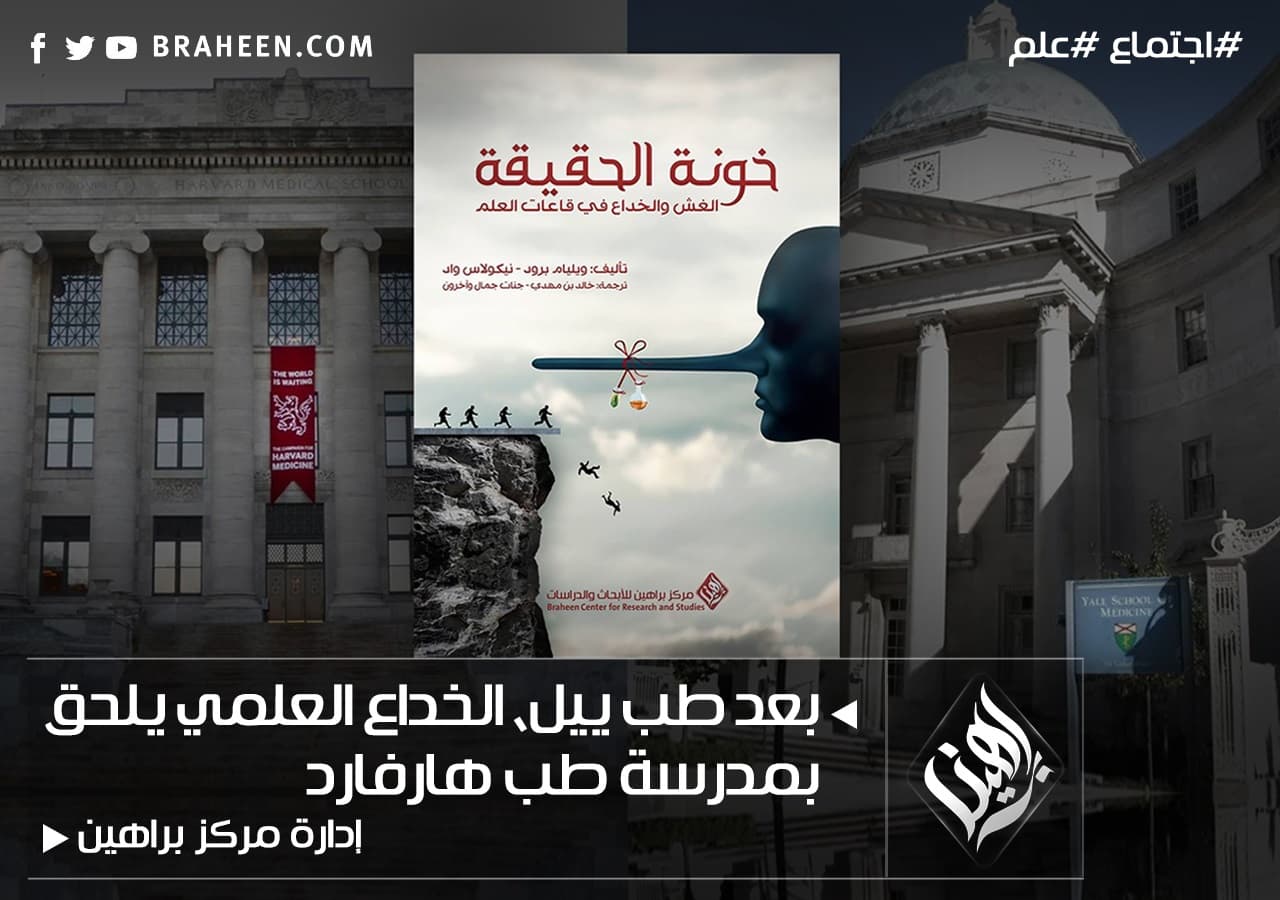
A few days ago, we published one of the stories presented by Broad and Nicholas Wade in the book "Traitors of Truth: Cheating and Deception in the Halls of Science." It was about an incident that occurred between 1979 and 1981 at Yale Medical School, which began investigating the impersonation of one researcher's work and his...
After Yale Medicine, Scientific Deceit Follows Harvard Medical School
A few days ago, we published one of the stories presented by Brod and Nicholas Wade in the book "Traitors of Truth: Cheating and Deception in the Halls of Science." It was about an incident that occurred between 1979 and 1981 at Yale Medical School, which began to investigate the impersonation of one researcher by another, and ended with the withdrawal of 12 papers due to the existence of fabricated and false data.
At the same time, there was news in the newspapers that 31 papers had been withdrawn from a prestigious cardiologist, this time from Harvard Medicine.
In the New York Times coverage of the news:
"A distinguished cardiologist at Harvard Medical School and at Brigham and Women's Hospital in Boston has scrubbed or falsified data into 31 published studies, and officials have concluded that they should be pulled.
Dr Piero Anversa has produced research suggesting that damaged heart muscles can be regenerated by stem cells, a type of cell that can transform itself into many other types of cells.
Although other labs could not reproduce his findings, his work led to companies developing new treatments for heart attacks and strokes and inspired clinical trials funded by the National Institutes of Health.
“Two or three papers may be of concern, but the 31 papers under investigation are something we’ve never heard of before. That’s almost all of the lab’s production, so most of what’s in the field is under investigation.”
The Harvard Medical School, Brigham Foundation, and Women’s Hospital began reviewing Dr. Anversa’s work in January 2013, and in April 2017, the Bergham Foundation and Women’s Hospital agreed to pay $10 million to the federal government as a settlement after Dr. Anversa admitted to submitting false data for research funding.
William Broad and Nicholas Wade published their book Traitors of Truth in 1982, and we are in 2018, and the problem continues to grow.
The authors argue that the problem is not the existence of cheating itself, but the popular ideas of science: “Common scientific ideology cannot satisfactorily explain the phenomenon of cheating. It deals with the phenomenon by denying that it is a problem of any importance or prevalence.
Referring to the previous incident, they said: "Fraud reveals not only the social structure of science but also the scientific methodology. Cheating and self-deception generate incorrect data, which challenge the self-correcting mechanisms of science, especially the verification of scientific results. As has been shown by many of the frauds discussed here, the replication of an experiment is often conducted as a last resort only, usually to confirm suspicions reached for other reasons.
The problem, the authors argue, is that “scientific authorities deny that cheating is more than a fleeting flaw from the face of science,” but the solution will only come if it is recognized that “the nature of science and its servants cannot be fully understood, except by acknowledging that cheating is endemic.”
More than a third of a century ago, is the picture moving towards that, or is it moving away from it?
- Management of the Brahin Center
—
Source: Brahin Center website - Posted on 2018-10-18 (archived at the Internet Archive)
https://braheen.com/articles/science-scientism/بعد-طب-ييل-الخداع-العلمي-يلحق-بمدرسة-طب-هارفارد