
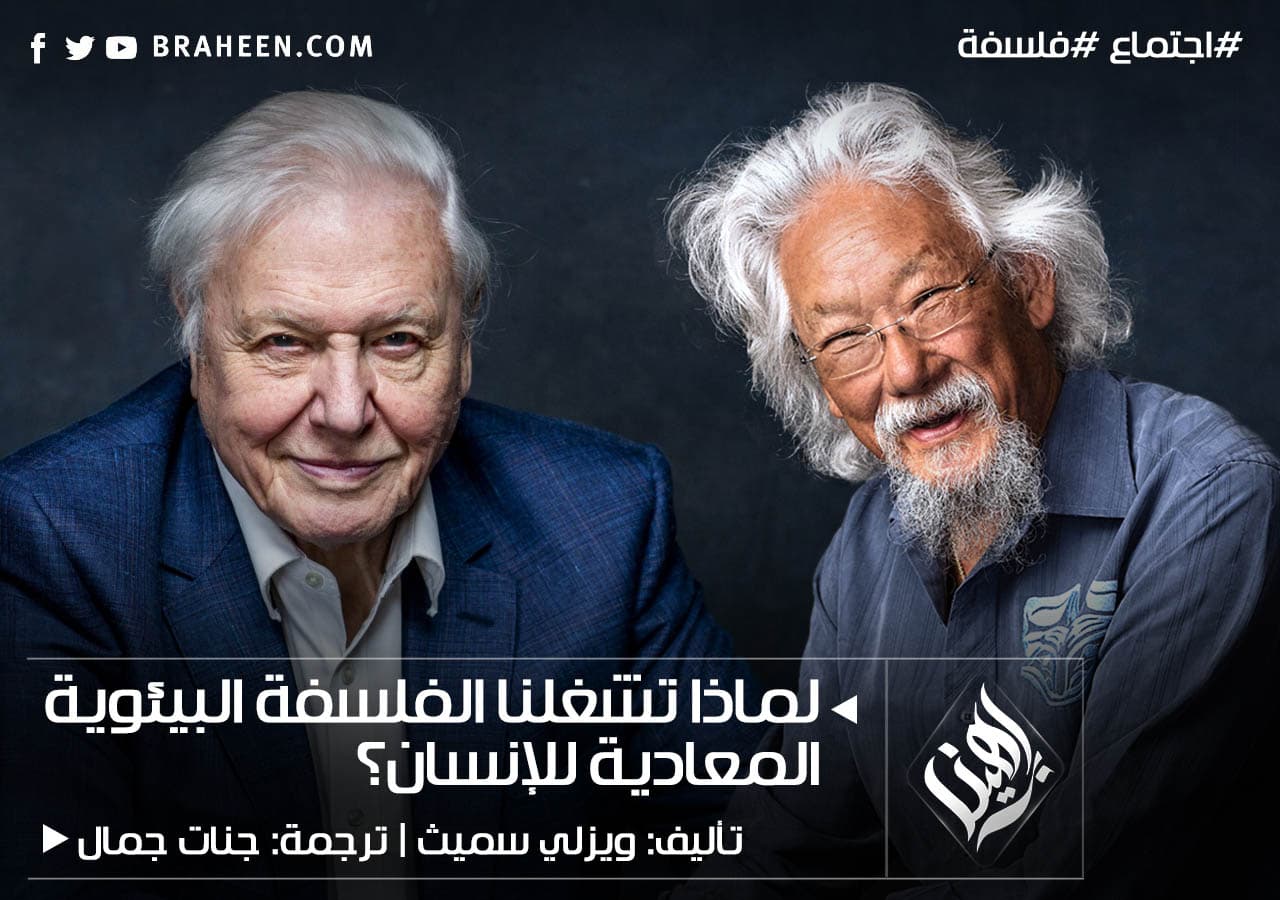
*Note: This article is from War on Man. In an age when key principles are often emotionally categorized, and we are dominated by stories that are not based on facts, many may question what they are.
Why do we care about anti-human environmentalism?
*Note: This article is from the book (War on Man) for more please review the book.
In an age when key principles are often emotionally labeled, and untruth stories dominate us, many may question the difference between our protection of the environment as a matter of human duty and the imposition of alleged “rights” to nature.
But, aside from this point, I fully agree that man has a duty to act responsibly toward the environment; and that the establishment of appropriate practices is a legitimate function of the law. Unlike extreme anti-humans, I believe that promoting human safety and happiness is crucial and, indeed, should be the first concern.
I understand that there may be a vital conflict between protecting the environment and promoting human safety and happiness, and there is ample room for a reasonable debate about how to strike the right balance. Such discussions may falter and sometimes reach a bitter end, but they have a necessary function in enacting acceptable public policies in a free society.
But when we claim to protect nature by redefining humanity as just one species on an equal footing with all other species on Earth, we do ourselves great harm. When we assert that plant and animal cover – perhaps even valleys, glaciers, and other geological phenomena – have all “rights,” we are devaluing liberal principles emanating from “the laws of nature or the God of nature.”
“Rights” can only be understood in a human context. The University of Michigan Professor of Philosophy Carl Cohen put it this way: “Right ... is a valid claim, or a potential claim, which may be made by a moral actor, according to principles governing both the claimant and the object of the claim.”
Professor of philosophy at the University of Reading in Britain David S. Oderberg describes this two-way concept somewhat differently:
What matters in obtaining rights is twofold: a) knowledge of B) freedom. More precisely, the right holder must first know that what he is pursuing is fundamentally good, and secondly, he must be free to do so. No one can be within the duty to respect the right of others if he does not know what he is supposed to respect.136
In short, in order for nature to possess rights, it must also be able to assume the attendant duties towards others. Thus, if the rights of nature "exist, regenerate, and flourish" can be imposed against us, we will have to be publicly able to make the same claim against nature, and of course this is a comic idea.
Environmentalists who embrace human exceptionalism declare that once we see ourselves as just a part of a whole, an equal part of nature, then we will treat nature the same way we want to be treated. But no other species is interested in protecting nature.
We are – and we are – the only species that can act against our immediate interests to protect the environment. And we are the only ones called upon to sacrifice our prosperity to protect the “rights” of everyone on the planet.
This book began with the crude declaration of young David Suzuki in 1972 that humans are "worms" living their lives "crawling for food and then pooping all over the environment." We close the circle with the eighties, Sir David Attenborough; famous for presenting the documentary The Living Planet and other BBC documentaries.
The TV presenter said that the human race is threatening its own survival and that of other species by depleting the world's resources. He added that the only way to save the planet from famine and extinction of species is to limit the steady population growth. "We are like a plague on this earth. A plague is landing on the earth for the next 50 years or more. The idea is not just in global warming; huge space, vast land that is used to cultivate and grow food for this massive population of nature."
Attenborough is the patron of Population Matters, the largest non-profit organization in the UK. One of the group’s representatives agreed with Attenborough, calling his anti-human analogy “appropriate,” that of Attenborough stating that we are “like a plague of locusts that exhausts everything they see before them and then dies.”138
When Suzuki first spoke, such statements shocked the crowd. Now, it is a cliche to defend the environment.
Simply put, radical anti-human goals and dreams are incompatible with human freedom and personal freedom. Giving nature rights will stifle prosperity. Environmental extermination laws will prevent, not rich countries, but poor countries from emerging from their plight and poverty. In the end, China’s harsh one-child policy only slowed the country’s population growth, and China’s actual population has not dwindled.
If such blatantly unfair measures did not reduce China’s population, what would it take to force the global population to actually shrink?
What about the others, the less civilized fanatics, who have the same anti-human ideology that permeates the mainstream of the environmental movement now, but without the obsessions, political tolerances and politics of modern aristocratic liberal "prohibitions"?
In the end, history shows the deadly consequences of allowing the anti-human trend to drive politics and culture; as we have learned from the manifold persecution provoked by the humane eugenics movement of the first half of the twentieth century.
Any victory for the anti-human movement within the pro-environmental framework threatens the theocratic environmental tyranny. Like forced eugenics, the anti-humanist agendas discussed in this book are all overly utopian, meaning that all the important perceived ends will eventually justify coercive means.
Don’t say you weren’t warned.
(135) Carl Cohen, The Animal Rights Debate (Roman and Littlefield, 2001), p. 17, available online at http://carl-cohen.org/books/AnimalRightsDebate/chapter3.pdf.
(136) David S. Oderberg, “The Illusion of Animal Rights,” Human Life Review, Spring-Summer 2000, p. 42, available online at http://www.scribd.com/doc/50084724/Oderberg-The-Illusion-of-Animal-Rights.
(137) Louise Gray, “David Attenborough—Humans are a plague on Earth,” The Telegraph, January 22, 2013, http://www.telegraph.co.uk/news/earth/earthnews/9815862/Humans-are-plague-on-Earth-Attenborough.html.
(138) Population Matters, “Is humanity a plague?” Population Matters, January 24, 2013, Last accessed October 13, 2013, https://www.populationmatters.org/humanity-plague/.
(139) “The most surprising demographic crisis,” The Economist, May 5 2011, http://www.economist.com/node/18651512.
(140) Edwin Black, War Against the Weak (Four Walls Eight Windows, 2003); also see http://www.waragainsttheweak.com/.
- Weasley Smith.
—
Source: Brahin Center website - Published on 2018-10-20 (archived at the Internet Archive)
https://braheen.com/articles/sociology/لماذا-تشغلنا-الفلسفة-البيئوية-المعادية-للإنسان؟