
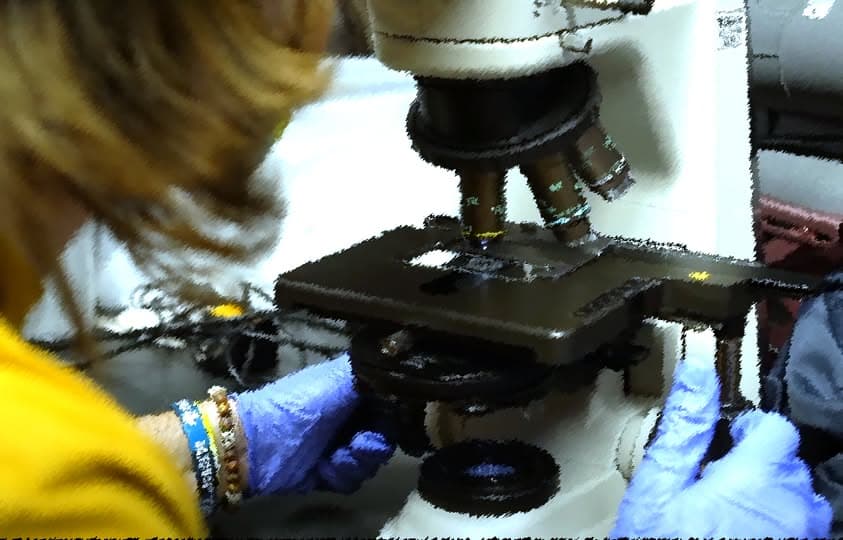
In 1993, Keith Kozminski was experimenting with an impressive new microscope, and he was a graduate student at Yale University.1 In this microscope were all kinds of luxuries, including the ability to make real-time video of cells.
Keith Kozminski in 1993 was experimenting with a new moving microscope; he was a graduate student at Yale University.1 This microscope had all sorts of luxuries, including the ability to do real-time cell video. Kozminski focused the focus of the microscope on the hump of the unicellular algae called Ilamydomonas and pictures of what no one had seen before in world history. Confusingly, the cilia are sometimes called "siata", hence the name "inside a whip") on the web.
Transport within the IFT is the mechanism that builds and sustains the mutation. If the mutation is cut off from the shunted cell, another mutation develops within an hour or so. During that time, small IFT floats can be observed actively rising on one side of the developing structure and descending on the other. However, if one or more protein components in the IFT are intentionally disrupted by intelligent laboratory manipulations, the mutation will not be reconstructed.
Materials are often pre-assembled in the bottom-up construction and brought to the construction site because that is more convenient. This was certainly what happened in the Iacocca Hall Tower, and this is what happens in the case of a harp. Before starting to build a new harp, cellular materials are brought to the assembly site near the bottom of what will become a new structure. Of course in human construction projects conscious workers know how much material they need, recognize it, and bring to the building site only the harp. Douglas Cole of the University of Idaho has argued that if this is the case – that is, if construction materials need an entry ticket to reach the cliff – no new materials will be allowed to bypass the transition zone to reach the cliff if the IFT crashes experimentally. This is exactly what has been observed in many of the homicidal mutants.3 The exact details of the filtering mechanism are still unknown, but you can be sure it will not be simple.
As with all comparisons, the construction of the Hidd is not compared to the human construction project in several respects, all of which are confirmed by how great the complexity of the cellular construction is. I will refer here only to one aspect. Although the human construction team leaves the construction project as soon as it is finished, but this is not the case in the cell. The failure of the IFT test in a cell with a full and complete Hiddd is also proven to occur immediately in the palace until it disappears.
The current IFT model imagines that at the beginning of construction, the freight wagons are often full. After completion, the column continues to respond to conditions at about the same rate, but some wagons are now empty. An unknown diversion mechanism so far seems to sense how much material is needed at any given moment, and the proportion of freight wagons between “chargeable” and “unchargeable” is dynamic, as required. Unlike the Iacocca Hall Tower, the boom is dynamic.
- Dr. Michael Behe, The Edge of Evolution: The Search for Darwinism's Limits, pp. 127
More: https://braheen.com/publications/حافة-التطور-البحث-عن-حدود-الداروينية
—
Source: Published on Facebook's "Braheen Center" page