
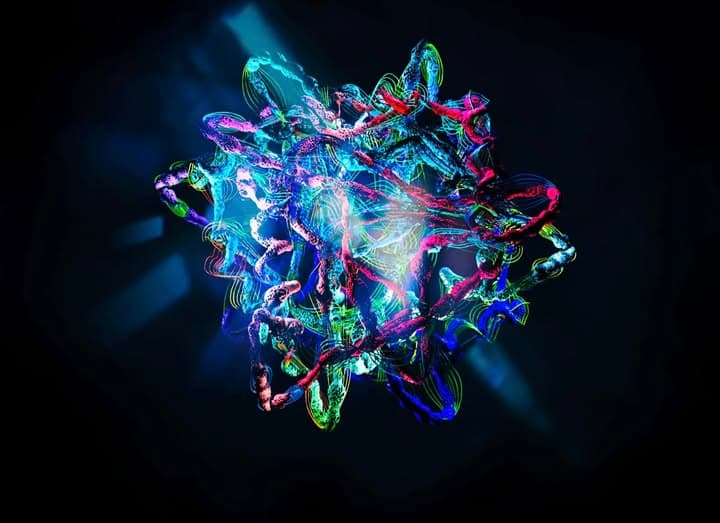
When the protein is involved, it has to take out almost all the water, so the oily side chains can meet effectively, which is a problem, as the polar atoms have to find partners with corresponding charges within the protein involved, or else...
When the protein is involved, it has to take out almost all the water, so the oily side chains can meet effectively, which is a problem, as the polar atoms have to find partners that have corresponding charges inside the protein involved, otherwise the protein will not be involved.
There are two ways in which a protein can solve a problem. First, parts of the protein can form a structure called an alpha helix, in which case the backbone of the protein will wrap itself, and this bypass geometry makes the oxygen atoms in the peptide groups directly correspond to the hydrogen atoms of the peptide groups in the four amino strands along the chain forming hydrogen bonds, and the next hydrogen bond is usually a solution with the four strands. Another structure that allows the regulation of hydrogen bonds between peptide atoms is called the peptide plate or beta fold. In this structure, the backbone of the protein is like the bent plate, up and down, and the peptide atoms attach to the surface of the slope according to the direction of the chain, and then the chain rolls back.
Snails and plates are defined as the secondary structure of proteins. A typical protein has 40 to 50 percent of the amino residues contained in those snails or plates. The remaining acids will either enter between the secondary structure sections or form irregular structures.
The helixes and plates are stacked against each other to form, in most cases, a spherical protein, the way the secondary structure elements are stacked is called the tertiary structure of the protein, and the driving force of the helix and plate stacking comes from the oily nature of many amino acids.
As the oils separate from the water by a distinct layer, the hydrophobic chains combine to form a water-free zone within the protein. However, remember that some protein side chains are either polarized or charged and prefer to stay in the water, hence the information that leads a particular protein to fold into a specific structure, as the pattern of polarized or oily side chains in the amino acid sequence dictates the need for the protein chain to involve most of the protein chains.
Another factor that also contributes to protein folding is that in all embedded proteins, some of the polar chains are embedded in a hydrophobic structure. If the polar atoms are unable to find a partner with which to form hydrogen bonds, then the protein balance is disturbed, but in most proteins, about 90% of the embedded polar chains form hydrogen bonds with the atoms of the protein structure or with other side chains in a pattern called "connect as much as you can".
More: https://braheen.com/publications/صندوق-داروين-الأسود-تحدي-الكيمياء-الحيوية-للتطور
—
Source: Published on Facebook's "Braheen Center" page