
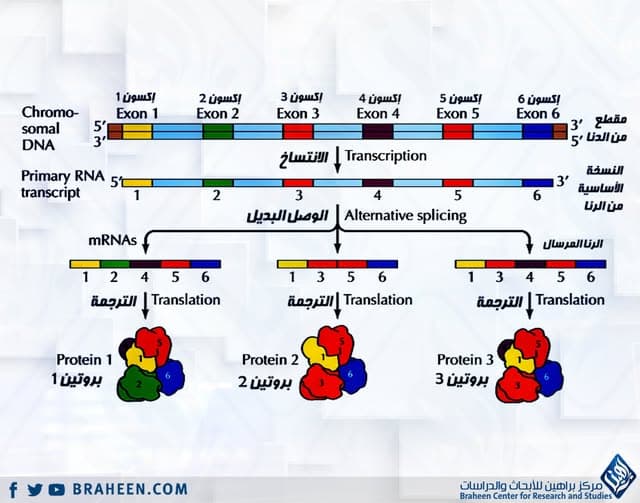
The central dogma of molecular biology is that DNA makes RNA (in the transcription stage), RNA makes proteins (in the translation stage), and proteins are all the cells of the body that make up...
The central dogma of molecular biology is that DNA makes RNA (in the transcription stage), RNA makes proteins (in the translation stage), and proteins form all the cells of the body we are made of.
However, as research progresses, it is becoming increasingly clear that the central tenet no longer accurately reflects what is happening at the molecular biology level.
After DNA sequences are copied to make RNAs, many are modified to not match the original. This process is known as "alternative splicing".
In this process, exons from the same gene are bound in different groups, creating different, but at the same time related, copies of mRNA. Thus mRNAs can be translated to produce different proteins with distinct structures and functions; all coming out of a single gene!
The link process can be performed in multiple different ways, so many final messenger sequences have sequences that no longer correspond to DNA sequences.
Dr. Shurjo K. Sen, Program Director of the Department of Genomic Sciences at the National Institutes of Health, says:
"What I think is that this alternative binding process makes the human genome incredibly complex... If we say that each gene has seven exons, for example, these seven exons can actually create hundreds of protein groups, because the alternative binding allows different exons to be connected in different ways.
"What this allows is for the human body to have a more complex set of proteins available for both structural and immune functions."
For example, RNAs from a single DNA sequence in fruit flies produce more than 18,000 different proteins through the surrogate link.
The alternative link is found in almost all eukaryotic organisms that carry out standard pre-messenger nuclear splicing, including animals, plants, and, in some cases, fungi.
—
Source: Published on Facebook's "Braheen Center" page