
In this paper, Lehigh University biochemist Michael Behe and University of Pittsburgh physicist Snook show how difficult it is for evolutionary processes to add any novel proteins to pre-existing protein structures to be front-end proteins.
In this research, Lehigh University biochemist Michael Behe and University of Pittsburgh physicist Snook show how difficult it is for evolutionary processes to add any novel proteins to pre-existing protein structures to create a protein-compatible interface with the original protein and join it functionally.
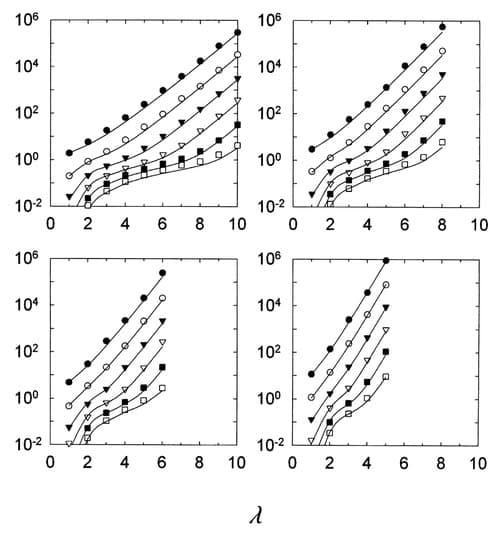
The authors point out that models of evolutionary processes often assume that a single mutation of a multiple gene can confer a new determinable property, but some protein features require the involvement of two or more amino acid residues, which may require several mutations. The authors modeled the evolution of these protein features by the point mutation in the multiple genes and analyzed the time of fixation in the population.
According to the paper, the time it takes for new protein features that require multiple point mutations in the duplicate gene to be repaired within a population is affected by population size. For very large population sizes N, where in the absence of selection the population is expected to contain one or more duplicate alleles that symbolize the feature, the time of fixation in the group hovers near the inverse of its point mutation rate, and slowly changes with the root ?th for 1N. Therefore, larger population sizes are required to produce new protein features that require the sharing of two or more amino acid residues simply by means of multiple point mutations in the duplicated genes to be repaired within a population.
In addition to traditional Darwinian processes, additional mechanisms are needed to produce many reciprocal effects between proteins:
"The need to interpret very large populations [10 9 or larger] to build the smallest multithalamic trait Risedues, which needs to be modified to two nucleotides over 10 8 generations by the processes we described in our model], and the need for large populations to exhibit more complex traits or to accelerate the appearance of those traits, suggests that gene multiplication and point mutations are two other mechanisms that are inefficient alone, at least for many types of double-cell mechanisms.
By demonstrating the inherent limitations of undirected evolutionary processes, this research provides indirect scientific support for intelligent design, and supports Behe's argument for intelligent design in response to some of his critics.
Michael Behe, David W. Snook, "Imitation of evolution by gene replication of protein properties", Proteinology, Part 13 (2004).
Michael Behe and David W. Snoke, “Simulating evolution by gene duplication of protein features that require multiple amino acid residues,” Protein Science, Vol. 13 (2004).
—
Source: Published on Facebook's "Braheen Center" page