
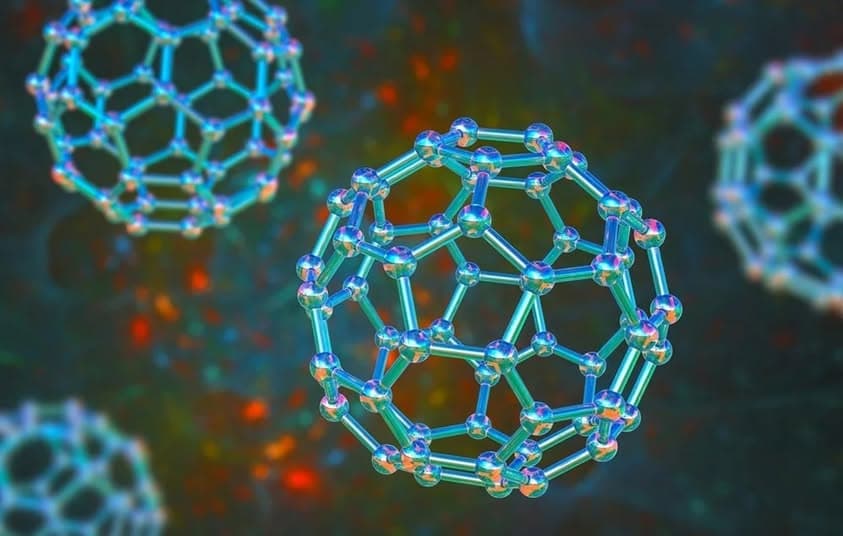
The next step is to consider whether there is any empirical evidence to support this idea. It is “unfortunately” impossible to carry out the experiment described above to monitor the vibration of the indicator; even if spontaneous collapse does not occur, the indicator must remain in position...
The next step is to consider whether there is any empirical evidence to support this idea.[3] Unfortunately, it is impossible for the above-mentioned experiment to be carried out to monitor the vibration of the indicator. Even if spontaneous collapse does not occur, the indicator must remain in position[1] and the two movements must disappear completely. Since the indicator is made up of a huge number of atoms, all its atoms must move in the same way in the opposite direction.[2] For these reasons, the pointer will always vibrate in one of the two states of vibration, even if pure quantum behavior is possible in principle. From the point of view of the “multiverse,” however, this thermal motion causes the universe to split into two universes; one observer sees the pointer vibrate in one direction while the other observer in the second universe sees the pointer vibrate in the other. This has been the subject of considerable empirical research in recent years.
We can test the idea of "automatic collapse" with an "interference experiment" similar in principle to the one that showed the interference of light passing through the double notch (see image 1.2); but so that a wave of physical waves is used[5] that is associated with a macroscopic object. If quantum physics predicts, according to the terms of the experiment, that the interference pattern will form, then we do not observe it: we conclude from this that the spontaneous collapse actually occurred. One of the large bodies studied for its quantum behavior is the molecule called Buckminster Fullerene Ball. This molecule is made up of 60 carbon atoms arranged in a semi-creative shape reminiscent of football; Hence the name “Bucky Ball”. In 1999, a group of physicists in Vienna under the leadership of Anton Zeilinger carried out an experiment in which they passed bucky balls (produced by one oven); one after the other; Through a barrier containing a number of openings (although they were not only two, the same principle of overlap applies here), he found that the pattern formed is the pattern of interference that can be explained based on the fact that this beam of particles has wave properties; thus it cannot be said that these particles passed through one particular opening, nor that the "automatic collapse" occurred. There are a number of reasons why experimenting with these molecules is much more difficult than photons. First, the mass of a large molecule means that the amount of its motion is very large even if it moves at a slow speed, so that the wavelength of the accompanying wave (according to De Bruy) is very small (one billionth of a meter in this case). Second, this molecule C60 (his other name) is a large molecule at a high temperature, so its atoms are in constant motion, and it is necessary that this movement be slow enough for the molecule's state to be apparently constant during interference; i.e., for it to remain "coherent".[6] Any procedure that allows the observer to determine from which apertures the molecule's pass will destroy this "coherence". It is expected that the C60 molecule will radiate two or three infrared photons as it passes through the device. But the wavelengths of these photons are much greater than the distance between adjacent openings; meaning that they cannot transmit any information about which opening the molecule has passed through, so the state of bonding is preserved. These factors are expected to become even more important if larger objects are studied.
Alistair Ray, Quantum Physics: Fact or Fiction?, translated by Osama Abbas
---------------------------
[1] i.e., to demonstrate the existence of quantum superposition in a macroscopic context. (translator)
[2] In order to avoid each other. (translator)
[3] All of this is intended: if this supposed vanishing could be observed, GRW theory would be wrongly translated, because the vanishing of the two movements would mean that the quantum behavior would remain in a macroscopic body, meaning that "automatic collapse" did not occur as the theory assumes. The author here examines whether an experiment, if carried out, would support or refute this "automatic collapse" theory.
[4] Again the author speaks of observing the superposition state in a macroscopic object; it is this which disproves the theory and proves it wrong. (translator)
[5] See De Bruy's Physical Waves section in Chapter 1. (translator)
[6] “Coherence” in the quantum context is meant to be the survival of the system in question on the state of superposition between its possible states, and its opposite “decoherence”; it is the end of the state of interdependence for various reasons in the multiple interpretations of quantum physics, and will come in the subsequent chapters talk about the process of “incoherence” and its relation to the non-reflective processes in some detail.
—
Source: Published on Facebook's "Braheen Center" page
https://www.facebook.com/braheen.org/posts/pfbid02vTJ6e86DroDiGj4gZYbHSv4EGSZxhQZrt6Tk3ahQKiJju1N5LSXvLitvBE2hDh3l