
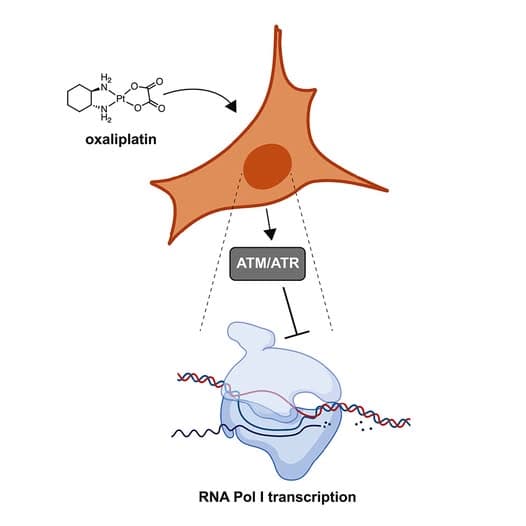
The mysteries of how molecules work inside a cell do not go away, and how we understand them is pivotal in treating many of the diseases that have burdened humanity. A research team from Preston University in a new paper published today in the Cell Journal of Chemical Biology has discovered how...
The mysteries of how molecules work inside a cell don't go away, and how much we understand is central to treating many of the diseases that have burdened humanity.
A research team from Preston University in a new paper published today in the journal Cell Chemical Biology has discovered how the signaling of ATM and ATR kinases inhibits DNA transcription, which is toxic in cancer cells.
Platinum compounds (Pt) are one of the most important classes of drugs used to treat many types of cancer, but we have not yet been able to understand how they work at the molecular level.
One of the compounds in this category is Oxaliplatin, which is used in the treatment of colorectal cancer and is the focus of this study.
The paper examined several previous studies that looked at the mechanisms of action of platinum-based drugs, including cisplatin and carboplatin. The authors noted that although these drugs have been used for decades to treat different types of cancer, their exact mechanisms of action are not fully understood. The paper also looked at previous studies that looked at the effects of oxaliplatin on DNA damage signals and cell cycle regulation.
The study showed that oxaliplatin inhibits the transcription of rRNA by sending signals to two kinases, ATM and ATR. They are enzymes from the family
Phosphatidyl inositol 3-kinase is a protein kinase of serine/threonine (PIKKs), which plays important roles in the cellular response to DNA damage.
Oxaliplatin also causes DNA damage and nucleophilic disruption, a structure within the cell nucleus responsible for RNA synthesis.
The study found that oxaliplatin causes the accumulation of two proteins to respond to DNA damage, NBS1 and TOPBP1, but transcription inhibition does not depend on these proteins.
Oxaliplatin does not cause significant DNA damage, which distinguishes its mechanism from previously identified DNA damage response pathways.
The study suggests that oxaliplatin stimulates a distinct signaling pathway involving the signaling of the enzymes ATM and ATR that inhibits transcription of RNA I polymerase without direct DNA damage.
This finding demonstrates how stress in the nucleus and transcriptional silencing can be linked to signals of DNA damage and highlights an important mechanism of cellular toxicity for platinum compound drugs.
The authors propose several ways of future research based on their findings. These include studying the role of other proteins and signaling pathways involved in the cellular response to oxaliplatin, particularly those involved in neuter stress and signals of DNA damage. They also study the effects of oxaliplatin on other types of cancer cells and models in the biome to determine the generalizability of the results.
—
Source: Published on Facebook's "Braheen Center" page