
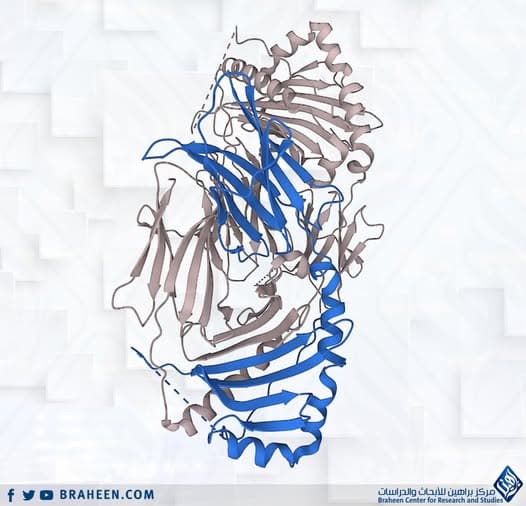
What if we start with two intelligently designed people? Is there any evidence in the data I have provided that this assumption is true? If it is, then not all of this analysis will tell us how many individual patterns we share with chimpanzees. There are definitely patterns...
What if our sequence similarities weren't the result of a common ancestor? What if we start with two intelligently designed people?
Is there any evidence in your statements that this assumption is true?
If that's true, all this analysis won't tell us how many individualistic patterns we share with chimpanzees.
There are inevitably surprising patterns of genetic changes in HLA-DRB1 that suggest an unknown process is occurring, assuming that this process that generates a particular hypervariability in (Xon2) and inhibits recombination in other regions, will generate a subtle diversity in the peptide-binding domain.
I also suggest that intelligent design has a hand in our upbringing to create diversity in HLA immediately after our species was created assuming we came from just one pair evidence supporting this idea comes from the fact that HLA DRB1 diversity has increased very rapidly however I count it from a few variations to more than 600 alleles in 6 million years or less!
The altered location of the exon 2 in the HLADRB1 gene also exhibits a mixture of transspecies relationships compared to the surrounding DNA sequences, which is difficult to consider to be descended from a common origin, and their repeated use of similar motifs in several species may even indicate co-design.
I suggest further; that this process may be specific to man since other primates do not exhibit the same degree of allele diversity in the lineages as in man.
This proposal could be supported, at least in part, by published data, as we know about the ability of both genetic mutation and high mutation to generate antigen diversity in many other immune cell strains.
Recombination accidents, either limited to (Exxon 2) or involving nearby neutrons.
In-breeding processes may be hidden and may be more frequent than we expect.
Some have identified the characteristics of sequences thought to be involved in recombination processes, and some are highly conserved in various HLA-DRB1 alleles.
In addition, several human population studies indicate that many of the HLA Class I and HLA Class II genes have undergone rapid recombination between alleles; for example, Kim and Hedrick state that "new alleles which appear to be the result of microrecombination between alleles have not been found in American Indians in the southern United States and other populations since the two Americas have been inhabited."
This includes many new variants in HLA-DRB1, HLA-DPB1, and HLA-B20. "There is direct evidence of high microatrophy at some MHC sites," continued Kim and Hedrick. In 1995, Zangenberg and colleagues tested the rate of transgenicity among intraalleletic gene mutations at HLA-DPB1.
According to these data, it seems illogical to assume that HLA-DRB1 diversity is the result of a process that generates hypervariability with genetic mutation in (Exxon 2) in order to form rapid diversity in HLA.
The story of HLA clearly shows the power and limitations of science. These scientific claims are temporary, and always subject to review. These calculations should be restated with an unknown number of variables and underlying assumptions, and when we can understand the genetic history, the dogmatic statements will come out of place for science to remain. We understand only so little of our genetic makeup that it is too early to make accurate calculations about our distant genetic past, yet there are still many things to consider.
- Dr. Ann Geiger.
—
Source: Published on Facebook's "Braheen Center" page