
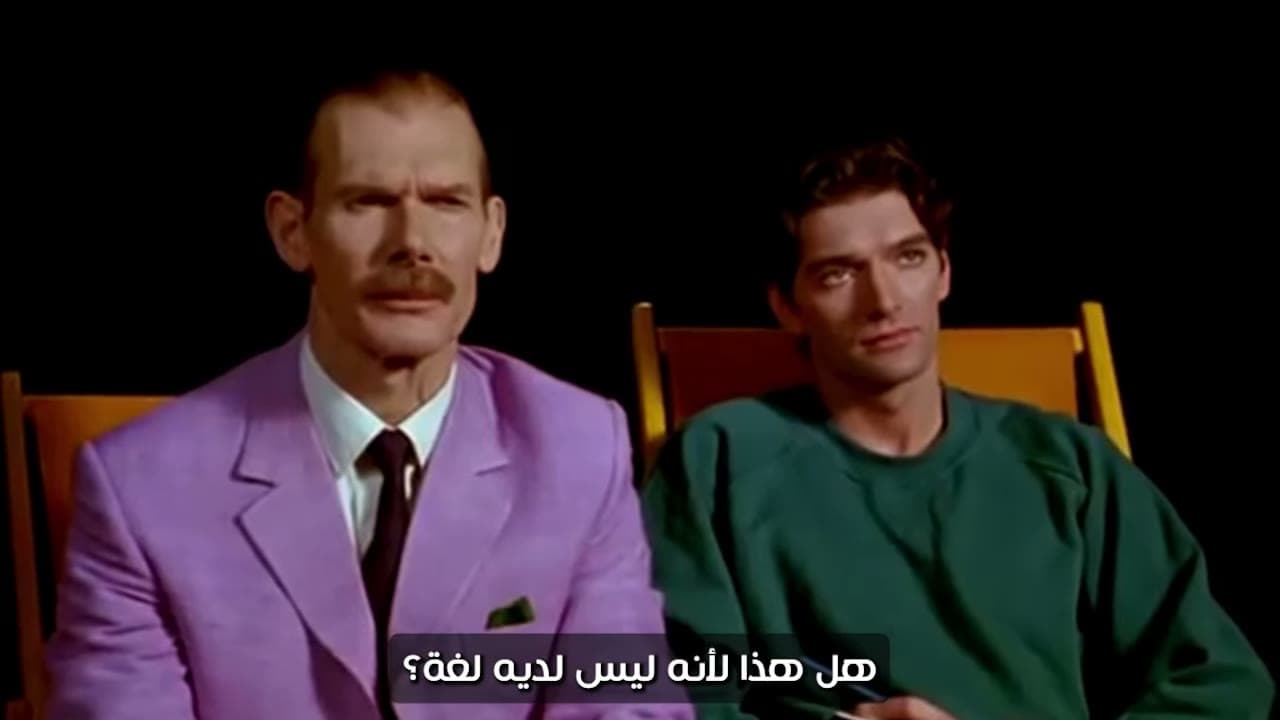
This passage is from a film about Wittgenstein’s life and philosophy, re-enacting Wittgenstein’s discussions with his students and Bertrand Russell while teaching at the University of Cambridge.
This is a film about Wittgenstein’s life and philosophy, re-enacting Wittgenstein’s discussions with his students and Bertrand Russell while teaching at Cambridge University, and the main idea we are trying to illustrate is the centrality of language in shaping the right picture of the world.
In her book, Wittgenstein and Philosophical Research, Dr. Mary Magin states:
“The specific examples that Wittgenstein used to counter our desire to remove language from the clothes of life and to relate it to what is going on in the speaker’s mind are not intended to be a basis for an alternative theory of meaning (or noun or understanding), but rather to recognize from the false images that we have built about language, and on the other hand, we see that the concepts of language and linguistic mastery are not explained by reference to the esoteric associations of the use of the word, but as a uniting the idea of the characteristic mode of behavior or form of life.
Wittgenstein’s main aim is to resist what he sees as a false abstraction and Augustine’s misinterpretational ambition; therefore, his objections to Augustine as a theory of the constituent essence of language should not be put forward. Any attempt to derive a theoretical explanation from Wittgenstein’s observations is clearly at odds with the central idea that the value of the partial states he describes lies in their ability to convince us that “everything is in front of our eyes.”
Paying attention to the details of particular examples in language while using it allows us to see what is right in front of us, and then to understand the puzzles that have puzzled us, and using these particular cases to show that no hidden accompaniments are needed to use language to understand how language works is the point of Wittgenstein’s critique.
So all of the points that we talked about are to be verified by a clear view of the operation of the phenomenon in particular partial states or a range of partial states, and thus we reach the required understanding, and achieving this goal is not just overcoming certain philosophical doctrines - the whole of Augustine thinking - but tries to show us how the perceptible structures in our use of language already reveal everything we need to solve the problems that puzzle us.
This explains the partial nature of Wittgenstein’s criticism and his repeated refusal to use his examples and analogies to construct a general theory, but he wants us to take advantage of them by seeing in detail the specific phenomenon – linguistic use – the structure and function of a particular piece of language, leaving the search for something hidden within the speaker’s mind.”
- Dr. Mary Magin, Wittgenstein and Philosophical Research, translated by Reza Zidane
More: https://braheen.com/publications/فتجنشتاين-والبحوث-الفلسفية
Video clip attached to the post: https://www.diyaa-alandalus.com/api/media/videos/braheen-org-244338831752304-dc6f3170.mp4
—
Source: Published on Facebook's "Braheen Center" page
https://www.facebook.com/braheen.org/videos/244338831752304